
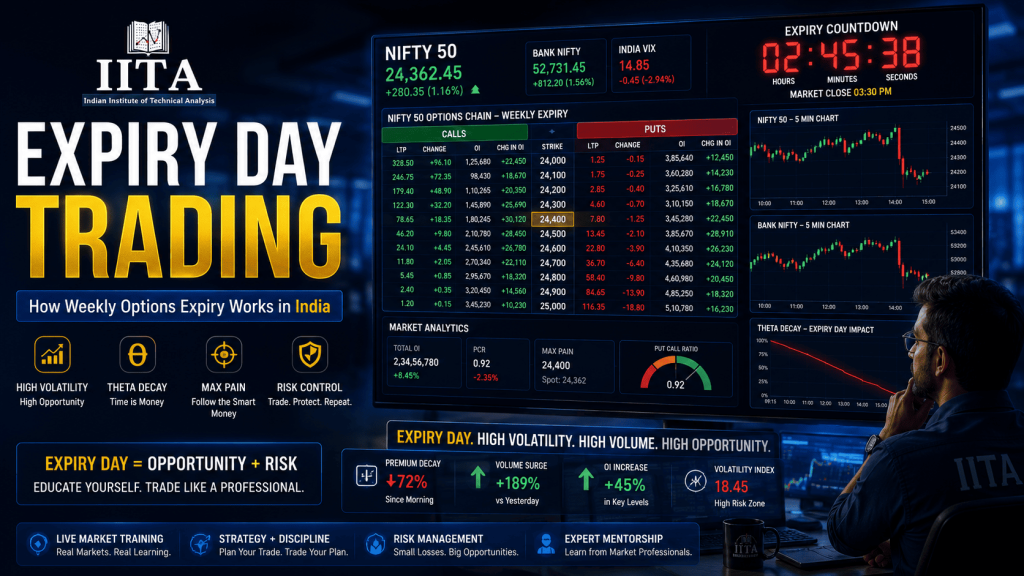
Expiry Day Trading Explained: How Weekly Options Expiry Works in India
Expiry day trading is the practice of trading options contracts on the day they expire. In India, this happens every Thursday for Nifty and Bank Nifty weekly options. Expiry days are characterised by extreme volatility, rapid changes in option prices, and very high trading volume. They attract thousands of traders looking for quick profits, but they are also responsible for some of the largest losses beginners experience.
This guide explains how expiry day works, why options behave differently on this day, and what every beginner must understand before even thinking about trading on expiry.
What Is Options Expiry?
Every options contract has a fixed end date, called the expiry date. On this date, the contract either has value (if it is “in the money”) or becomes worthless (if it is “out of the money”). After expiry, the contract ceases to exist.
In the Indian market:
- Nifty weekly options expire every Thursday
- Bank Nifty weekly options expire every Thursday (as of 2024-25; check current SEBI rules for latest changes)
- Monthly options (for Nifty, Bank Nifty, and individual stocks) expire on the last Thursday of the month
- If Thursday is a market holiday, expiry shifts to the previous trading day (usually Wednesday)
Why Expiry Day Is Different from Every Other Day
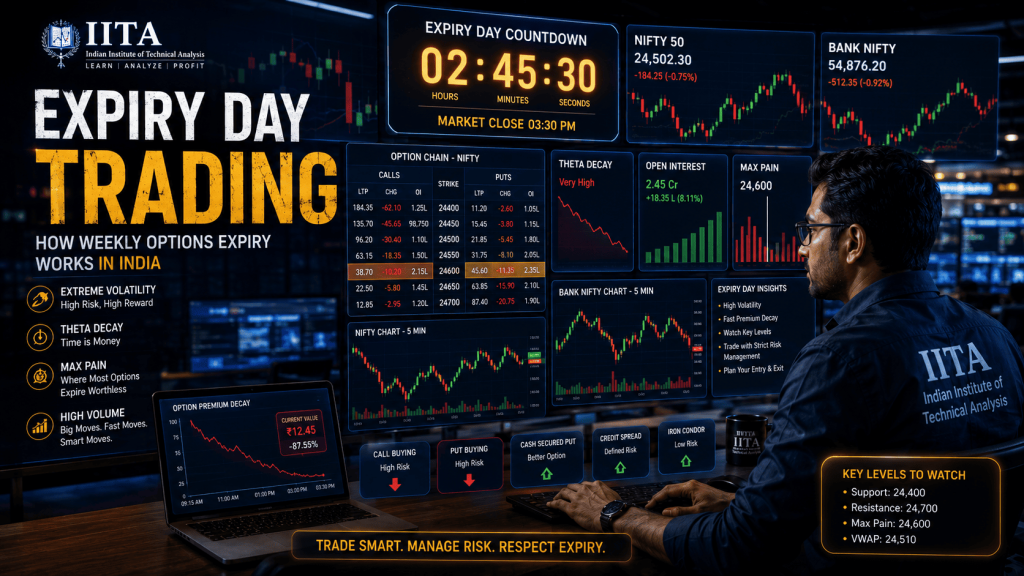
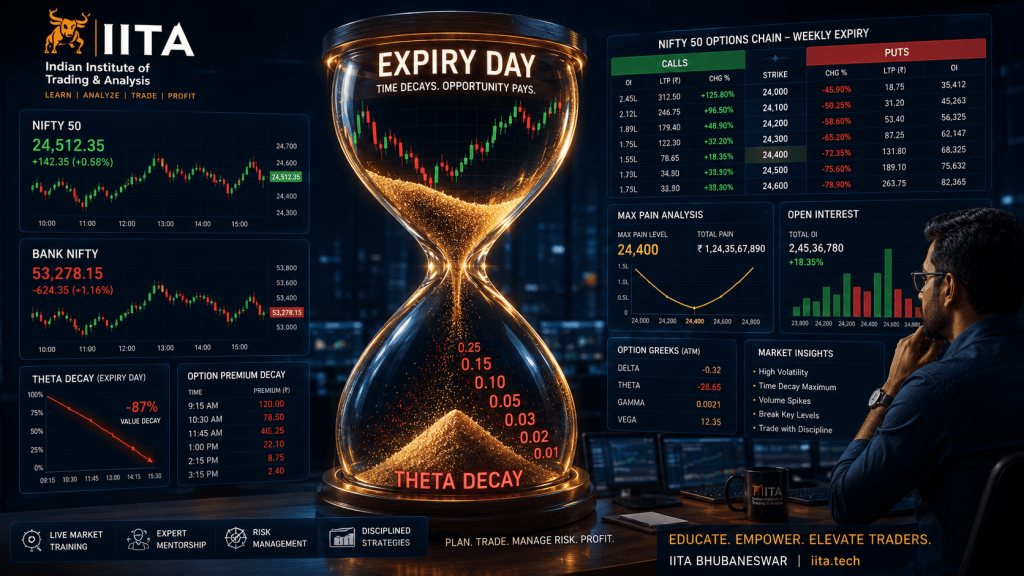
On expiry day, options behave very differently from other days because of one factor: time decay (theta).
Options slowly lose value every day as they approach expiry, because there is less time for the expected price move to happen. On the last day, this time decay accelerates dramatically. An option that was worth ₹50 in the morning can be worth ₹5 by afternoon and ₹0 by 3:30 PM if the market does not move in its favour.
This creates two things simultaneously:
- Opportunity: Options are very cheap on expiry day. A small market move can cause an option’s price to multiply several times over in minutes.
- Extreme risk: Those same cheap options can go to zero just as fast. Time is actively working against option buyers on expiry day.
The Attraction: Why Beginners Are Drawn to Expiry Trading
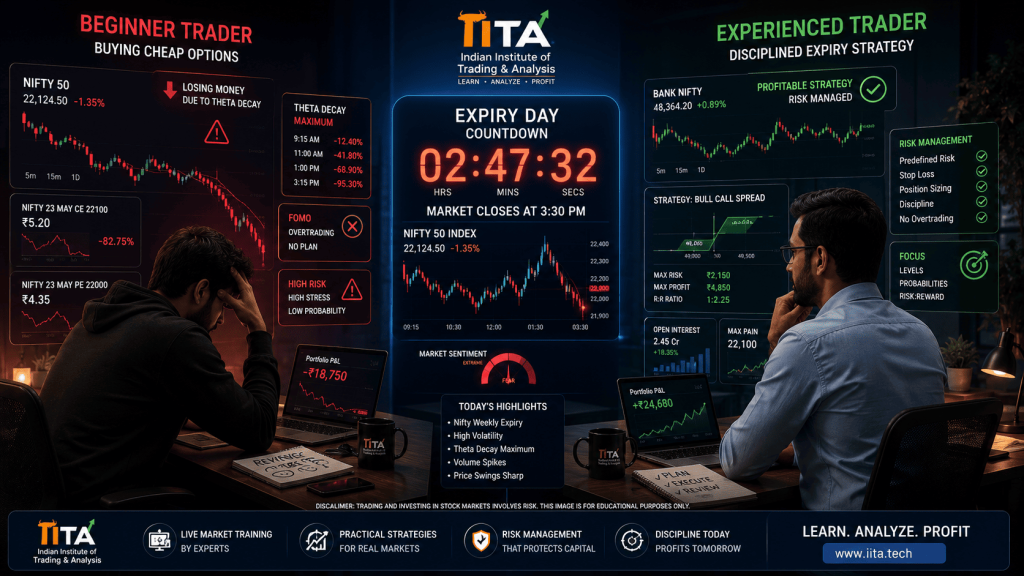
Expiry day stories are all over social media: “I turned ₹5,000 into ₹50,000 on expiry!” These stories are real but extremely misleading because they show survivorship bias – you only hear from the tiny minority who got lucky. You do not hear from the thousands who lost their entire premium that same day.
The low cost of options on expiry day (some Nifty options cost just ₹5–10 per unit) creates the illusion that you are not risking much. But when you buy 5 or 10 lots at ₹5, you are still risking ₹6,000–12,000 per trade, and most of these cheap options expire worthless.
How Professional Traders Approach Expiry Day
Professional and experienced traders approach expiry day very differently from beginners:
- They trade with a clear plan and predefined risk limits, not with hope or excitement
- They focus on price levels (support, resistance, VWAP) and do not chase random moves
- They use defined-risk strategies (like spreads) rather than naked option buying
- They accept that most expiry day trades will be small and do not aim for jackpots
- They reduce position sizes on expiry compared to other days because of the higher volatility
Key Concepts for Expiry Day Trading
Theta Decay
Theta measures how much an option loses in value per day. On expiry day, theta is at its maximum. This means option buyers are fighting against the clock – the option is losing value every minute. Option sellers benefit from this decay, which is why many professional expiry strategies involve selling options, not buying.
Max Pain
Max pain is the price level at which the maximum number of options (both calls and puts) expire worthless, causing the least payout by option sellers. On expiry day, markets often gravitate toward the max pain level, especially in the last 1–2 hours. Traders use max pain as a reference point, not a guarantee.
Pin Risk
When the market price is very close to a strike price at expiry, there is uncertainty about whether an option will expire in the money or out of the money. This is called pin risk, and it creates unpredictable moves in the last minutes of trading.
Common Mistakes in Expiry Day Trading
- Buying cheap out-of-the-money options hoping for a jackpot – most expire at zero
- Overtrading due to the excitement of fast-moving prices
- Not using a stop loss because “the premium is already small”
- Revenge trading after an early loss, chasing the next move
- Trading without understanding theta decay and how it affects option pricing
- Using position sizes that are too large for the volatility of expiry day
Should Beginners Trade on Expiry Day?
The blunt answer: no, not until you have significant experience. Expiry day is the most volatile, fastest-moving, and most unpredictable day of the trading week. It requires skills in options pricing, quick decision-making, strict risk management, and emotional control – all of which take months to develop.
A better path for beginners:
- First: Learn chart reading, technical analysis, and basic options concepts
- Then: Trade options on non-expiry days where time decay is slower and moves are less erratic
- Finally: Gradually observe and then participate in expiry day trading with very small position sizes
Frequently Asked Questions About Expiry Day Trading
What is expiry day trading in simple words?
Expiry day trading is buying and selling options on the day those options contracts expire. In India, Nifty and Bank Nifty weekly options expire every Thursday. On this day, options lose value very fast (time decay), making it both a high-risk and potentially high-reward day for traders.
When is Nifty weekly expiry?
Nifty weekly options expire every Thursday. If Thursday is a stock market holiday, the expiry moves to the previous trading day (usually Wednesday). Monthly expiry is on the last Thursday of each month.
Is expiry day trading profitable?
It can be, but only for experienced traders with proper risk management and strategies. For beginners, expiry day is the fastest way to lose money. The majority of retail traders lose money on expiry day trades.
What is theta decay?
Theta decay is the reduction in an option’s value as it approaches its expiry date. On the last day, this decay is extremely fast – an option can lose most of its value in hours. Option buyers are hurt by theta decay; option sellers benefit from it.
Learn Options and Expiry Trading the Safe Way at IITA Bhubaneswar
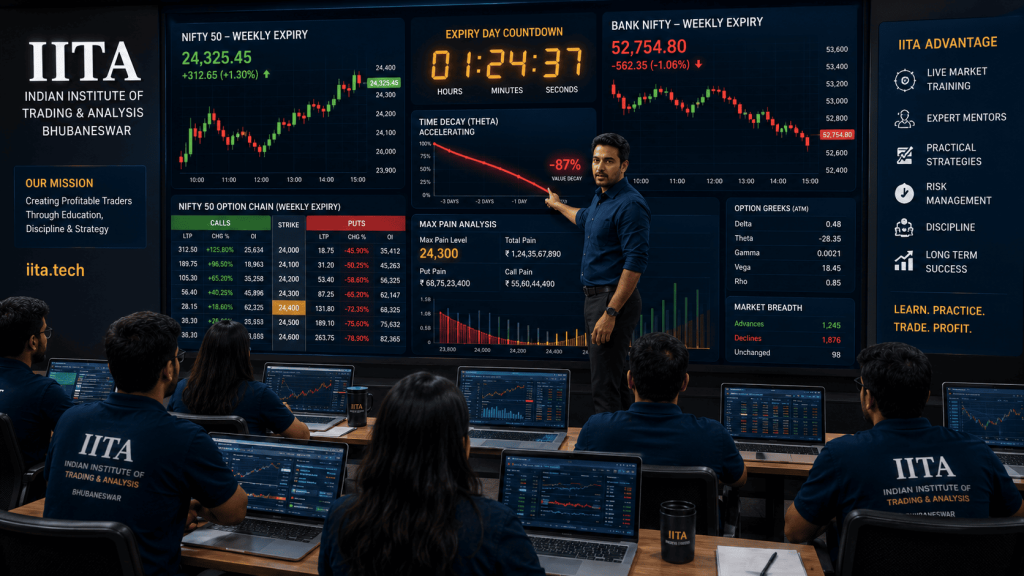
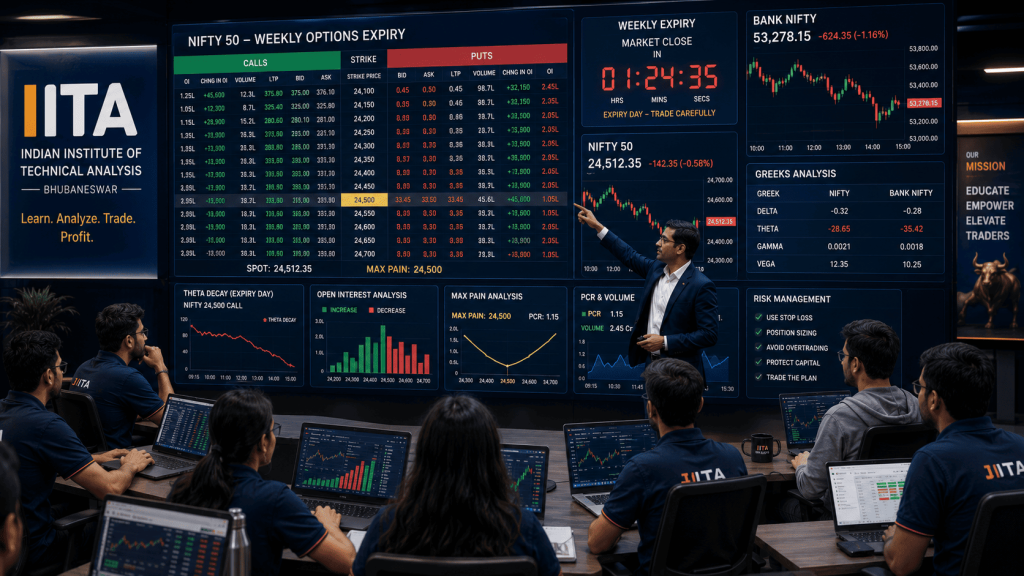
Expiry day trading is not for self-taught beginners. The speed, volatility, and complexity of options on expiry day require structured training with an experienced mentor who has traded through hundreds of expiry days. IITA provides exactly that.
Our options training covers everything from basic call/put concepts to advanced expiry day strategies, all practised on live markets. We teach you when to trade and, equally importantly, when to stay away.
Why IITA for Options and Expiry Training
- Live expiry day sessions – observe and learn from real expiry day trading with mentors
- Options pricing and Greeks taught practically, not just theoretically
- Risk management for options – position sizing, stop losses, and defined-risk strategies
- Gradual progression from paper trading to live expiry participation
Do not gamble on expiry day. Learn it properly. Visit iita.tech or call us for a free workshop.
Disclaimer: Stock market trading involves financial risk. This article is for educational purposes only and is not investment advice.