
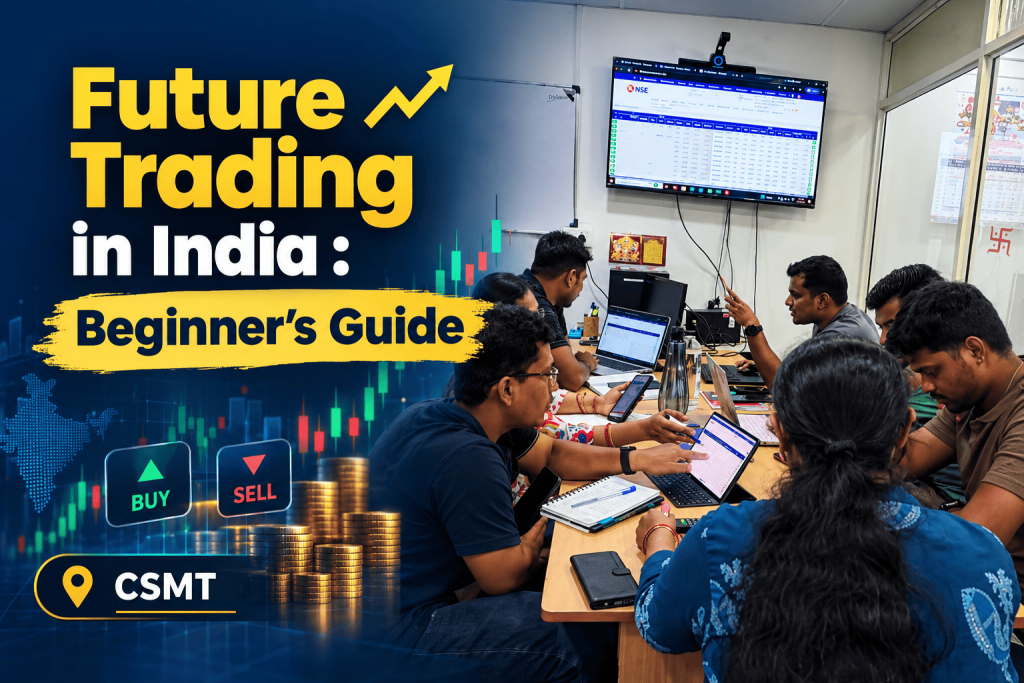
Futures Trading in India: Beginner’s Guide
If you’ve spent any time around the stock market crowd near CSMT or scrolling through finance influencers on Instagram, you’ve probably heard someone mention “futures” in the same breath as quick profits and even quicker losses. And honestly, both are true. Futures trading in India has grown into one of the most talked-about segments of the derivatives market, but it’s also one of the most misunderstood by beginners who jump in without understanding what they’re actually signing up for.
This guide is meant to slow things down a bit. We’ll walk through what futures trading in India really means, how it works on Indian exchanges, the terminology you need to know before you place your first trade, and why so many first-time traders lose money in their opening months. By the end, you should have a clear, practical picture of whether futures trading is something you want to explore further — and how to do it responsibly.
What Is Futures Trading?
At its core, a futures contract is an agreement between two parties to buy or sell an asset at a predetermined price on a specific future date. The asset could be a stock, an index like the Nifty 50, a commodity like gold, or even currency pairs. Unlike buying shares outright, where you own the underlying company, a futures contract is purely a bet on where the price is headed.
Futures trading in India is regulated by SEBI and takes place primarily on the National Stock Exchange (NSE) and the Multi Commodity Exchange (MCX) for commodities. When people in Mumbai talk about “F&O trading,” the F stands for futures and the O stands for options — together, they make up the derivatives segment that has exploded in popularity over the last decade.
How Futures Trading Works in India
Here’s where a lot of beginners get tripped up. Futures contracts aren’t traded in the same way as regular stocks. Instead, they come with a few structural features that make them both powerful and risky.
Lot Size: You can’t buy a single unit of a futures contract. Every contract has a fixed lot size determined by the exchange. For example, if Reliance Industries has a lot size of 250 shares, you’re trading in blocks of 250, not one at a time.
Expiry Date: Every futures contract has an expiry — typically the last Thursday of the month for most Indian stock and index futures. Once the contract expires, it’s settled, and you either walk away with a profit, a loss, or you roll over your position into the next month’s contract.
Margin Requirement: This is arguably the most important concept for a beginner to understand. You don’t need to pay the full value of the contract upfront. Instead, you deposit a percentage of the total value as margin, which gives you leverage. This is exactly why futures trading in India attracts so many traders — the potential for outsized returns on a relatively small investment. It’s also exactly why so many traders get wiped out. Leverage cuts both ways.
Mark-to-Market (MTM): Unlike stocks where your profit or loss only matters when you actually sell, futures positions are settled daily. Your account is credited or debited based on the day’s price movement, which means you need to keep enough funds available to cover potential losses.
Futures vs Options: What’s the Difference?
Since we’re talking about futures trading in India, it’s worth briefly touching on how futures differ from options, since beginners often confuse the two. With a futures contract, both the buyer and seller are obligated to complete the transaction at expiry. With options, the buyer has the right, but not the obligation, to exercise the contract, while the seller (writer) carries the obligation. This single difference changes the entire risk profile. Futures can lead to unlimited losses if the market moves against you sharply, whereas an options buyer’s loss is typically limited to the premium paid.
Why Beginners Are Drawn to Futures Trading
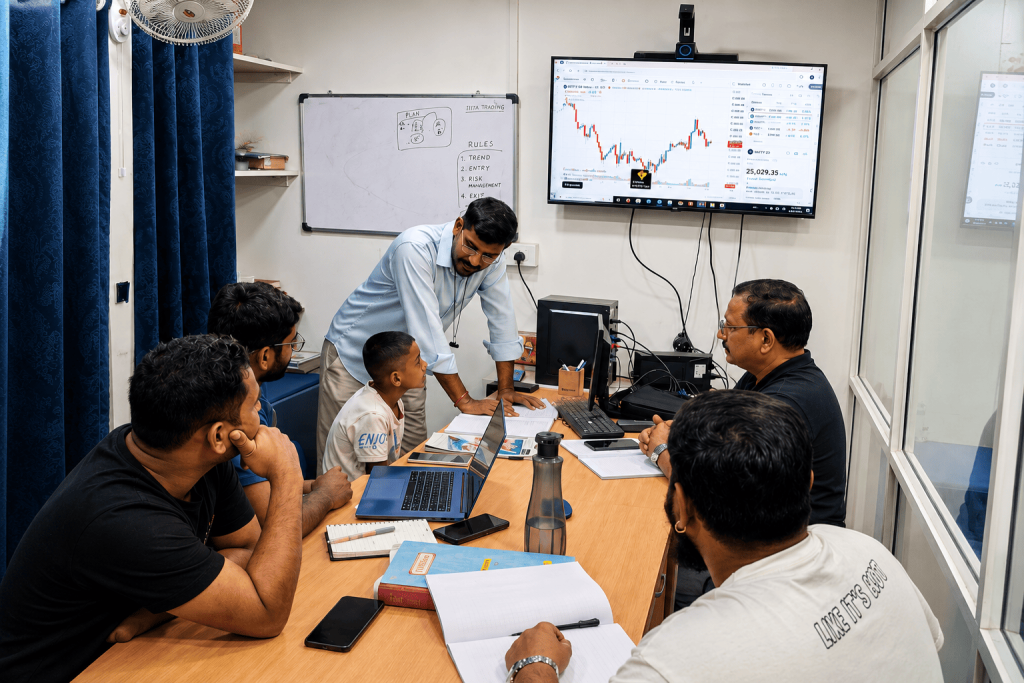
There’s a simple reason futures trading in India has become so popular among younger investors, especially in cities like Mumbai: leverage. With a relatively modest amount of capital, you can control a position worth several times that amount. If the trade goes your way, the returns can be substantial compared to what you’d earn from delivery-based equity investing.
But that same leverage is a double-edged sword. A 2% adverse move in the underlying asset can translate into a much larger percentage loss on your margin. This is precisely why SEBI has, over the past couple of years, tightened rules around retail participation in the derivatives segment — a large percentage of individual traders in the F&O segment end up losing money, according to SEBI’s own studies. It’s not meant to scare you away from futures trading, but it should make you respect the risk involved.
Steps to Start Futures Trading in India
If you’ve decided you want to explore futures trading in India, here’s a realistic starting point rather than jumping straight into a trade:
- Open a trading and demat account with a SEBI-registered broker that offers F&O trading.
- Understand your broker’s margin requirements and how much capital you’ll need to trade even one lot comfortably.
- Study the underlying asset — whether it’s a stock, index, or commodity — and understand the factors that move its price.
- Practice with a paper trading account or simulator before putting real money on the line.
- Start small. Trade one lot, understand how margin calls and MTM settlements actually feel in real time, before scaling up.
- Have a stop-loss strategy for every single trade. This isn’t optional in futures trading — it’s the difference between a manageable loss and an account-wiping one.
Common Mistakes First-Time Futures Traders Make
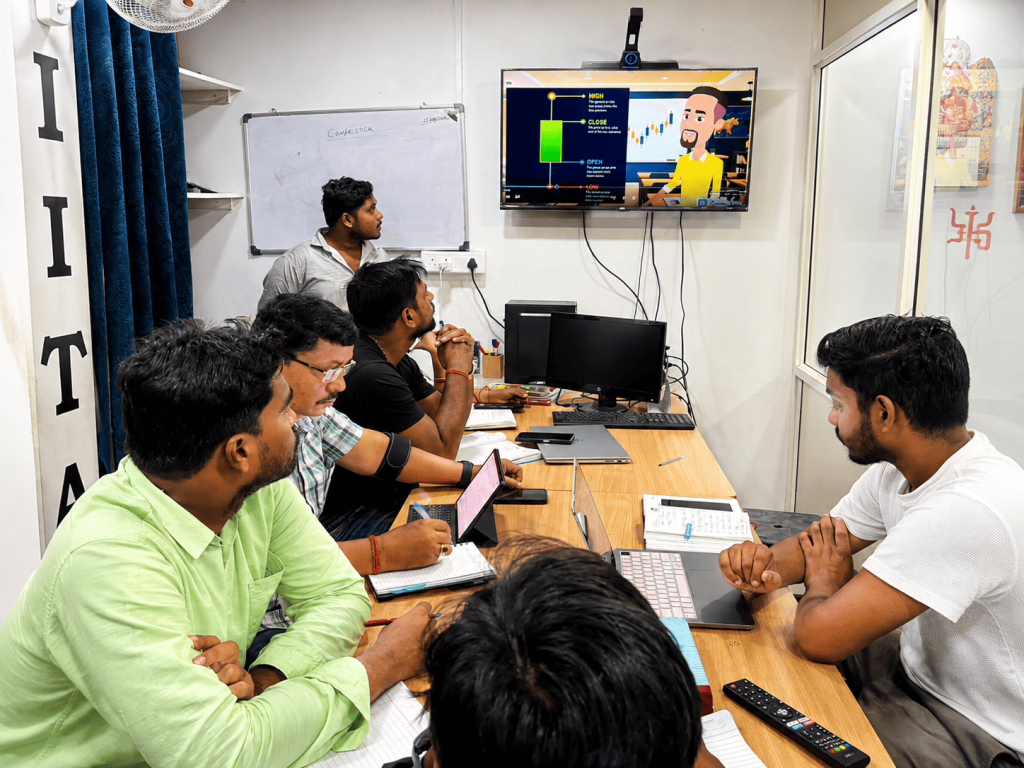
Most beginners don’t fail at futures trading in India because they didn’t understand the theory — they fail because they ignore risk management once real money and real emotions are involved. Overtrading, ignoring stop-losses, trading with money they can’t afford to lose, and chasing losses by doubling down are the patterns that show up again and again. Another common mistake is treating futures like a get-rich-quick tool rather than a skill that takes months, sometimes years, to genuinely master.
Is Futures Trading Right for You?
There’s no universal answer here. Futures trading in India can be a rewarding avenue for traders who take the time to build genuine market knowledge, develop discipline, and treat losses as part of the learning curve rather than a personal failure. It’s considerably riskier than long-term equity investing and isn’t something to dabble in casually with your savings. If you’re someone who enjoys studying markets, tracking global cues, and making quick, calculated decisions, it might be worth exploring — but only after proper training.
Why Learn Futures Trading With IITA Mumbai
This is exactly the gap IITA Mumbai aims to fill. Instead of learning futures trading in India through trial, error, and expensive losses, our stock market courses are built to take you from the fundamentals — chart reading, technical analysis, risk management — all the way to live market practice under the guidance of experienced trainers. Whether you’re a college student curious about the markets, a working professional looking to diversify your income, or someone who’s already dabbled in trading but wants to trade with more discipline, structured learning makes a real difference.
Futures trading in India rewards those who prepare. It punishes those who don’t. The choice of which side of that line you end up on often comes down to the quality of guidance you get when you’re just starting out.
📞 Book Your Free Career & Market Guidance Session Today!
Not sure where to begin? Speak with our academic counselors and discover the right learning path based on your goals.
📍 Office: Andheri West, Mumbai
💻 Training Mode: Both Offline & Online Classes available
📞 Call / WhatsApp: +91 84520 18280, +91 91870 98700
🌐 Website: https://iita.tech/stockmarket-course-in-mumbai/
📸 Follow us on Instagram: @stockmarketcourse_iita
Subscribe to Our YouTube Channels: 🔹 IITA Official: https://www.youtube.com/@iitab 🔹 Sudha Das (Market Learning): https://www.youtube.com/@sudhadas8420 🔹 Subrat Das: https://www.youtube.com/@subratdas2506
Disclaimer: Stock market trading involves financial risk. This article is for educational purposes only and is not investment advice.
IITA – https://iita.tech/stockmarket-course-in-mumbai/