
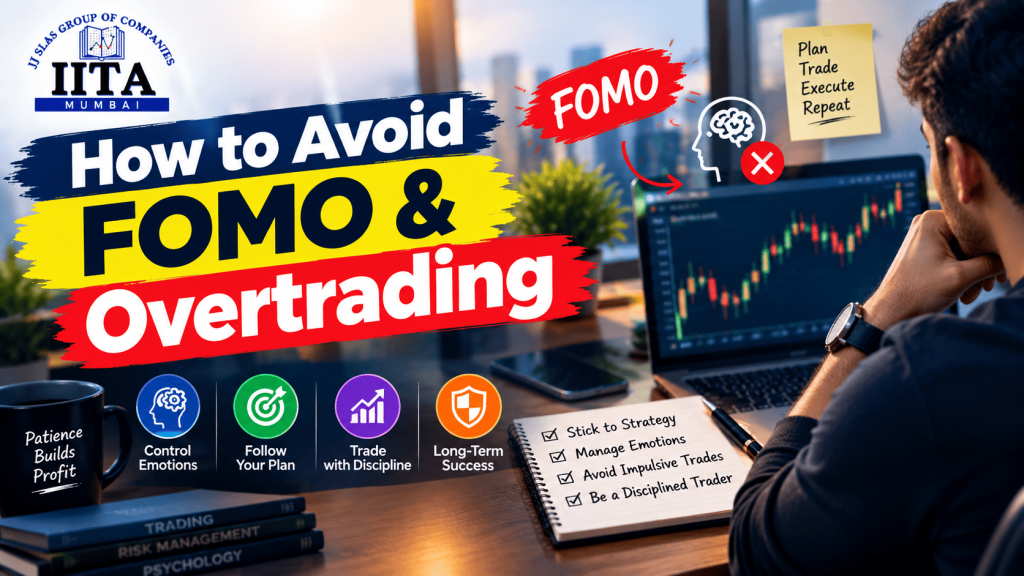
Most trading accounts aren’t destroyed by bad analysis. They’re destroyed by chasing rallies and taking one trade many. Here’s how to stop.
How to Avoid FOMO & Overtrading: The Part of Trading Nobody Wants to Work On
Ask ten struggling traders what they need. Nine will say a better strategy.
Almost none of them need a strategy.
What they need is to stop buying stocks at 11am because the price jumped 6% and they couldn’t stand watching it go without them. What they need is to stop taking a trade on a day when their plan called for two.
Learning to avoid FOMO and overtrading is unglamorous deeply unsexy and worth more than any indicator you will ever learn. Lets talk about why its hard and what actually helps.
FOMO Isn’t Stupidity. Its Biology
Worth saying clearly because people beat themselves up about this: the urge to chase is not a character flaw.
Watching others gain while you don’t registers as a threat. Loss aversion makes a missed gain feel like an actual loss. Your brain treats “everyone else is making money” as a signal that you are falling behind the group. Which for most of history was genuinely dangerous information.
Trading apps then add real-time price updates, push notifications and a social media feed full of profit screenshots. The environment is close to designed to trigger this response.
So “just be disciplined” is advice. You need structure that works when you’re emotional not the hope that you won’t be.
What Overtrading Is
Overtrading isn’t simply “too many trades.” A market maker places thousands a day.
Its trades taken outside your plan. Boredom trades. Revenge trades. Trades taken because you’ve been watching screens for four hours and feel you should have something to show for it.
The tell isn’t the count. It’s whether you can point to the rule that produced each one.
Why Both Are So Expensive
FOMO entries are costly for a structural reason: you’re buying after the move, which means your stop is far away and your risk-reward is terrible before you’ve even started. You’re also usually buying from people who entered earlier and are now happily selling to you.
Overtrading costs in three layers.. Taxes on every round trip. Exposure to noise rather than your edge.. Decision fatigue. The fifteenth decision of the day is measurably worse than the second.
They feed each other. FOMO trade fails you feel stung you take a revenge trade to recover that fails too. Three losses in ninety minutes none of them from your strategy.
Things That Actually Help
Write the plan before the market opens
Not vaguely. Specifically. Which stocks, what setup, what entry trigger, what stop, what size, maximum number of trades.
Once written you’re no longer deciding in the moment. You’re checking against a list. That’s an easier cognitive task and it holds up much better under pressure.
Set a daily loss limit and physically stop
Decide your maximum loss for the day. Hit it close the platform leave the desk.
Not “trade smaller after this.” Stop. The whole point is that your judgement after hitting that limit is compromised so you cannot rely on your judgement to decide what happens next. The rule has to be automatic.
This single change fixes accounts than anything else I know of.
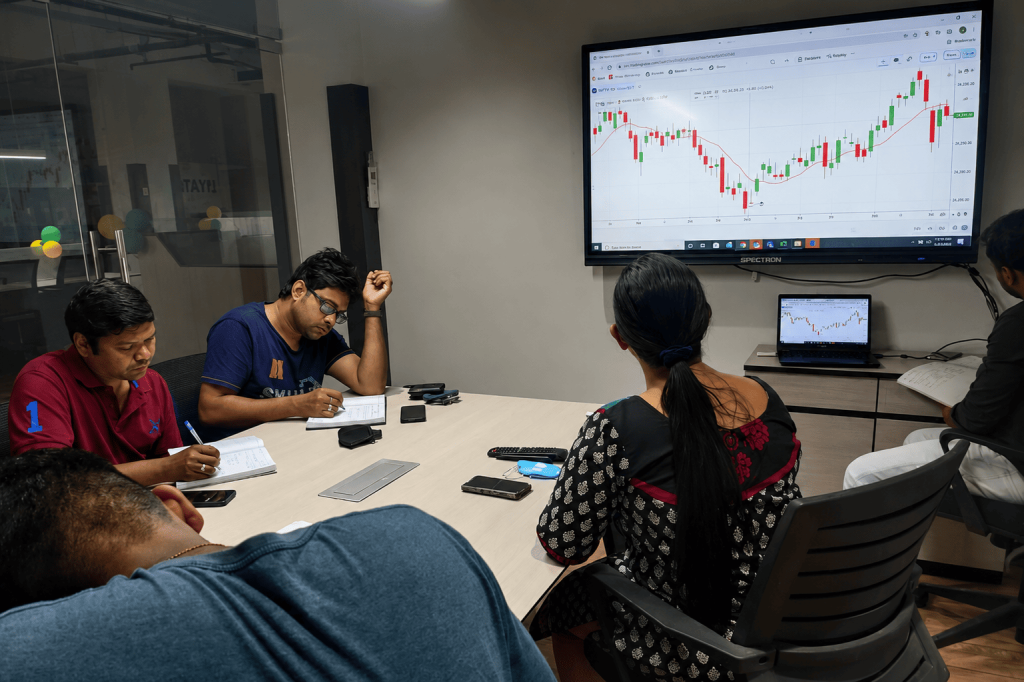
Accept moves. Properly
Not as a slogan. As arithmetic.
two hundred and fifty trading sessions a year thousands of listed stocks. On any given day something somewhere is up 15%. You will never catch most of them. That is not a failure state; it’s the condition of participating in markets.
The traders who last have genuinely made peace with this. The ones who haven’t spend their careers sprinting after moves that’re already over.
Cut your exposure to triggers
Leave the Telegram groups where people post P&L screenshots. Turn off price alerts you don’t act on. Stop having a business news channel playing in the background while you work.
You’re not being disciplined by resisting these things all day. You’re depleting yourself. Remove the trigger of fighting it repeatedly.
Keep a journal that records the reason
Not entry, exit and P&L. One line: why did I take this?
Because when you write “stock was moving didn’t want to miss it ” you cannot hide from what that was. A month of those entries is more persuasive than any article because its your handwriting.
Then every month separate your trades into plan-based and impulse-based and total the P&L for each. Most people find their planned trades were profitable and their impulse trades ate the profit. Seeing that in your numbers changes behaviour in a way advice never does.
Wait for the pullback
Practical tactic against chasing. If a stock has run and you want in wait for a retracement to a defined level.
You’ll miss some that never come back. You’ll also stop buying tops, which’s the more expensive habit by a distance.
The Boredom Problem
Rarely discussed, quietly responsible for a lot of damage.
Days there is nothing to do. Your setup doesn’t appear. The correct action is no action.
You sat down to trade. You have capital. You’ve done the preparation. Doing nothing feels like wasting the day so you find a trade.. Finding a trade is not the same as a trade finding you.
Plan for this. Have something else scheduled. Reading reports reviewing past trades actual work. Boredom with no outlet reliably converts into trades.
Why Rules Beat Willpower
The reason all of the above is written as rules than intentions is simple.
Willpower is a resource. It runs out. By 2pm on a day having resisted four impulses already you’re running on empty and the fifth impulse wins.
Rules decided in advance when you were calm don’t consume that resource. You just follow them. It’s the difference between deciding whether to eat dessert every night and having already decided you don’t eat dessert on weekdays.
What We Emphasise at BKC
We put trading psychology alongside the modules rather than as a bolted-on final session because we’ve watched too many technically competent people fail purely on execution.
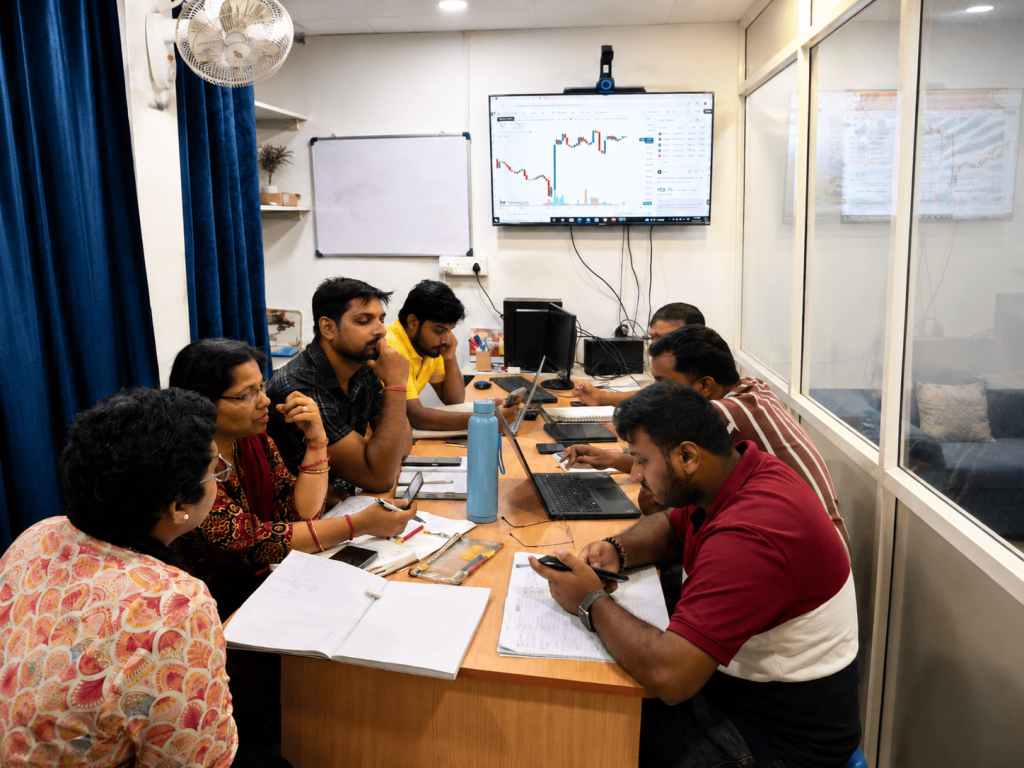
Every student keeps a journal from day one. Including during paper trading. Only see their own pattern after a month of entries and that recognition tends to do more than anything a trainer says out loud.
Final Thoughts
You cannot eliminate the urge to chase or the itch to trade. Anyone promising otherwise is overselling.
What you can do is build a structure that limits the damage when those urges arrive: a written plan, a hard loss limit, a trade cap, a journal that records reasons and fewer triggers in your environment.
Markets will be open tomorrow.. The day after. The opportunity you missed today will be replaced by another one. Provided you still have capital when it shows up.
That’s the game.
Frequently Asked Questions
How do I know if I’m overtrading? If you can’t point to the rule in your plan that produced a trade, it was an impulse trade. Count those over a week rather than counting total trades.
Is it realistic to eliminate FOMO completely? No, and treating it as a personal failing makes it worse. The goal is structure that limits its impact, not the absence of the feeling.
What is revenge trading? Taking an immediate trade after a loss to win the money back. It’s almost always larger, less planned and worse-timed than a normal trade, and it’s one of the fastest routes to a serious drawdown.
Does a journal genuinely help? It’s the single most effective tool most traders ignore — but only if you record your reason for each trade. P&L alone tells you nothing about why you’re losing.
Should I stop trading for the day after hitting my loss limit? Yes, and physically step away. The rule only works if it’s automatic, because the judgement you’d use to override it is exactly the judgement that’s compromised at that moment.
📞 Book Your Free Career & Market Guidance Session Today!
Not sure where to begin? Speak with our academic counselors and discover the right learning path based on your goals.
📍 Office: Andheri West, Mumbai
💻 Training Mode: Both Offline & Online Classes available
📞 Call / WhatsApp: +91 84520 18280, +91 91870 98700
🌐 Website: https://iita.tech/stockmarket-course-in-mumbai/
📸 Follow us on Instagram: @stockmarketcourse_iita
Subscribe to Our YouTube Channels: 🔹 IITA Official: https://www.youtube.com/@iitab 🔹 Sudha Das (Market Learning): https://www.youtube.com/@sudhadas8420 🔹 Subrat Das: https://www.youtube.com/@subratdas2506
Disclaimer: Stock market trading involves financial risk. This article is for educational purposes only and is not investment advice.