
Paper Trading in India: How to Practice Trading Without Risking Real Money

Paper trading (also called virtual trading or simulated trading) is the practice of buying and selling stocks, indices, or derivatives with fake money in a simulated market environment. It lets you practice everything – placing orders, reading charts, testing strategies, managing positions – without risking a single rupee of real money. For beginners, paper trading is the safest and smartest way to build trading skills before going live.
This guide explains what paper trading is, why it matters, which platforms you can use in India, and how to practice effectively so the experience actually translates to real trading skill.
Why Paper Trading Before Real Trading?
Would you take a driving test without ever practising? Would a pilot fly passengers on their first flight? Trading is a skill that requires practice in realistic conditions before real stakes. Here is why paper trading matters:
- Zero financial risk – you learn the mechanics of trading without losing money
- Strategy testing – you can test whether a strategy actually works before betting real capital on it
- Confidence building – by the time you go live, you already know how to place orders, set stop losses, and manage trades
- Mistake learning – you will make every beginner mistake (wrong order type, no stop loss, overtrading) during paper trading, where it costs nothing, not during real trading, where it costs money
Best Paper Trading Platforms for Indian Traders
1. TradingView (Paper Trading Feature)
TradingView is one of the most popular charting platforms worldwide and includes a built-in paper trading feature. You can place simulated trades on Indian stocks and indices with fake money while using the same charts and indicators you would use in real trading. It is free to use with limited features (paid plans unlock more).
2. Neostox
Neostox is an Indian virtual trading platform specifically designed for NSE-listed stocks and derivatives. It uses real market data and lets you practise trading Nifty, Bank Nifty, and individual stocks. It is one of the most realistic simulators available for the Indian market.
3. Moneybhai (by Moneycontrol)
Moneybhai is a free stock market simulator by Moneycontrol that gives you virtual money to trade Indian stocks. It is simpler than TradingView or Neostox but works as a good starting point for absolute beginners.
4. Broker Demo Accounts
Some Indian brokers offer practice modes or demo accounts within their apps. Check with your broker (Zerodha, Angel One, etc.) if they offer a paper trading or simulation feature. However, dedicated simulators like Neostox tend to be more feature-rich.

How to Paper Trade Effectively (Not Just Play Around)
The biggest mistake beginners make with paper trading is not taking it seriously. They take random trades, use unrealistic position sizes, and skip stop losses because “it’s not real money anyway.” This teaches you nothing. Here is how to do it right:
- Treat it exactly like real money. Use the same capital amount you plan to start with in real trading. If your real capital will be ₹20,000, paper trade with ₹20,000.
- Follow your trading plan. Define your entry rules, exit rules, and stop loss rules, and follow them strictly. Paper trading is practice for your discipline, not just your strategy.
- Keep a trading journal. Record every paper trade: why you entered, where your stop loss was, the result, and what you learned. This journal is your real progress tracker.
- Trade during live market hours. Paper trading on historical data is less realistic. Trade in real time so you experience the pressure and speed of live markets.
- Track your results over at least 50–100 trades. A strategy needs dozens of trades before you can evaluate whether it works. Five or ten paper trades prove nothing.
How Long Should You Paper Trade?
There is no fixed rule, but here is a practical guideline:
- Minimum 2–3 months of consistent paper trading
- At least 50–100 trades following a defined strategy
- Consistent profitability over this period (you do not need to win every trade, but your account should be growing overall)
If after 3 months of disciplined paper trading your account is growing, you have evidence that your strategy works and you know how to execute it. That is when you graduate to real trading with small capital.
If after 3 months your paper account is losing money, you have saved yourself from real losses. Go back, study more, adjust your strategy, and try again. The market is not going anywhere.
The Limitations of Paper Trading (Be Honest About Them)
Paper trading is essential, but it is not perfect. Be aware of these limitations:
- No real emotions. Losing fake money does not feel like losing real money. Fear, greed, and panic only show up with real capital. Paper trading prepares your skills, not your emotions.
- Slippage and execution. In real trading, your order may not fill at the exact price you see. Paper trading simulators often ignore this.
- Overconfidence risk. A successful paper trading run can make you overconfident. Start real trading with small sizes and stay humble.
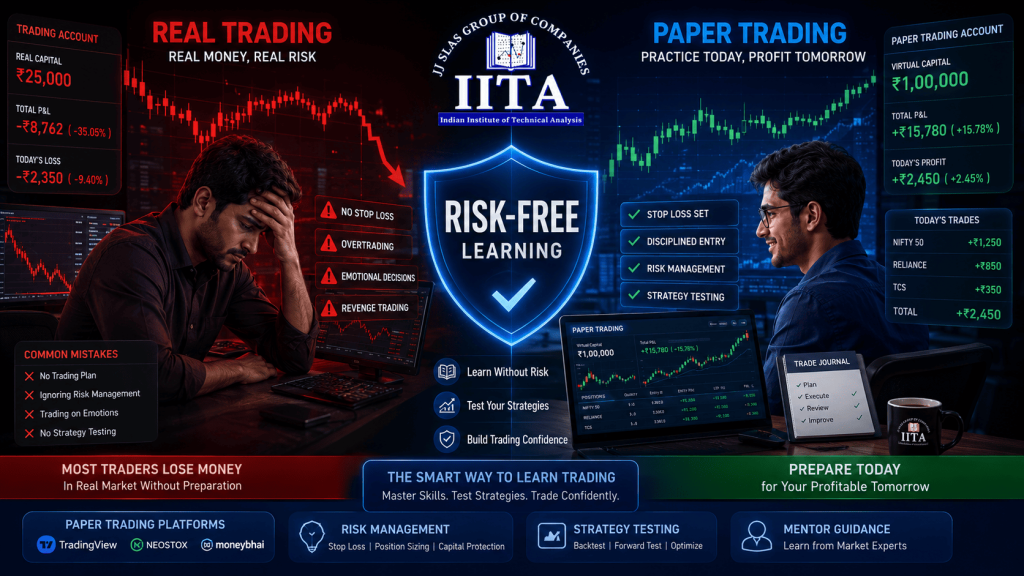
Despite these limitations, paper trading remains the best practice tool available. It is infinitely better than jumping into real trading blind.
Frequently Asked Questions About Paper Trading
What is paper trading in simple words?
Paper trading is practising stock market trading with fake money in a simulated environment. You use real market data and real charts, but no real money is involved. It lets you learn and test strategies without financial risk.
Which is the best paper trading app in India?
For Indian markets, Neostox is one of the most realistic simulators for NSE stocks and derivatives. TradingView’s paper trading feature is also excellent and offers a wide range of charting tools. Moneybhai by Moneycontrol is a good free option for beginners.
Is paper trading really useful?
Yes, if done seriously. Paper trading builds your skills in chart reading, order placement, stop loss management, and strategy testing. However, it does not replicate the emotional pressure of real money. Use it to build skills first, then graduate to real trading with small amounts.
How long should I paper trade before using real money?
At least 2–3 months with consistent practice (50–100+ trades). You should be consistently profitable on paper before risking real money. If you are not profitable in simulation, you will not be profitable with real capital.
From Paper to Profit: Structured Training at IITA Bhubaneswar
Paper trading on your own is good. Paper trading with an experienced mentor reviewing your trades and pointing out your mistakes is much better. At IITA, paper trading and simulated practice are built into the training curriculum.
Our students do not just learn strategy in the classroom. They practise it through guided paper trading sessions, review their results with trainers, and only move to live markets when they have demonstrated consistent discipline and skill.
IITA’s Practice-First Approach
- Guided paper trading sessions during the course
- Trade journal reviews with mentors to identify patterns in your decision-making
- Gradual transition from paper trading to small real-money trades under mentorship
- Post-course practice support so you are not alone during your first real trades
Build skills safely first. Visit iita.tech or call us for a free workshop.
Disclaimer: Stock market trading involves financial risk. This article is for educational purposes only and is not investment advice.