

Follow a realistic beginner to trader journey inspired by a Borivali student — the stages, mistakes, and lessons that shape a confident, independent trader.
From Beginner to Trader: A Borivali Student’s Journey
Every experienced trader was once a complete beginner, staring at a candlestick chart with no idea what any of it meant. The beginner to trader journey isn’t a straight line — it’s full of confusion, small wins, frustrating losses, and gradual clarity. This article walks through what that journey realistically looks like, using the experience of a typical Borivali-based student as a relatable framework for anyone just starting out.
Stage 1: Curiosity and Confusion
Every beginner to trader journey starts the same way — curiosity sparked by a headline, a conversation, or seeing someone else’s portfolio grow. For many students in Borivali, this curiosity often begins during college, triggered by finance electives, YouTube videos, or friends already dabbling in the market.
At this stage, confusion is completely normal. Terms like “options,” “derivatives,” “P/E ratio,” and “candlestick patterns” feel like a foreign language. Many beginners either give up here, overwhelmed by the complexity, or push through by seeking structured guidance.
Stage 2: The Decision to Learn Properly
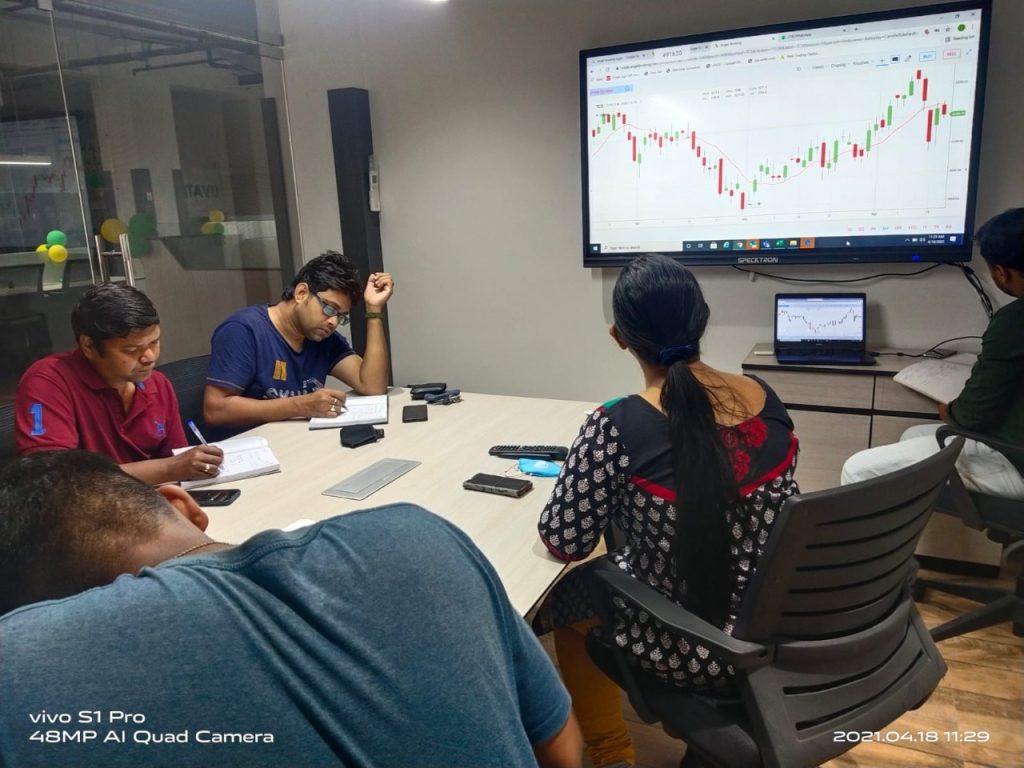
The turning point in most successful beginner to trader journeys is the decision to learn systematically rather than piecing together random information. This is often when students enroll in a structured course, choosing to build a foundation in market basics, financial statements, and chart reading before attempting to trade with real money.
A typical realization at this stage: Free content online is abundant but scattered — helpful for isolated concepts, but rarely structured enough to build genuine confidence without significant trial and error.
Stage 3: Learning the Fundamentals
This stage of the beginner to trader journey typically involves:
- Understanding how the stock market functions and how prices are determined
- Learning to read basic financial statements and key ratios
- Getting comfortable with candlestick charts and simple technical indicators
- Understanding the difference between investing and trading, and between equity and derivatives
Students often describe this phase as intellectually engaging but slow — concepts need repetition before they truly click, and it’s tempting to rush ahead before the basics are solid.
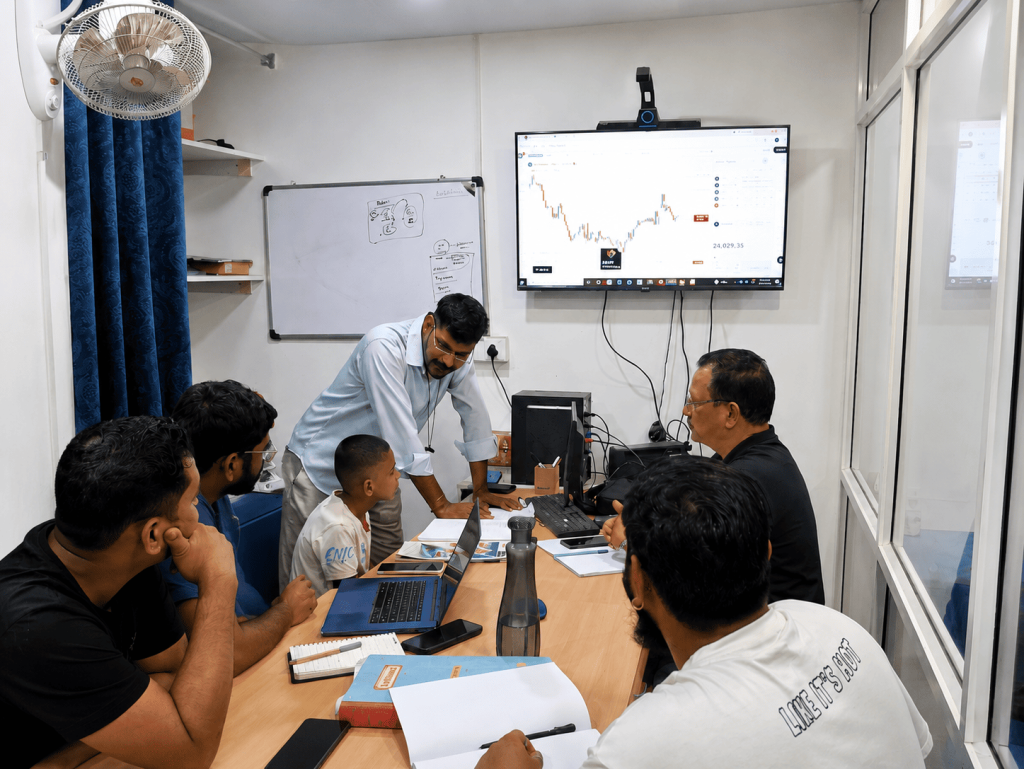
Stage 4: Paper Trading — Learning Without Losing Money
A crucial but often skipped part of the beginner to trader journey is paper trading — practicing with simulated trades before risking real capital. This stage allows beginners to test their understanding, notice recurring mistakes, and build confidence without financial consequences.
For a Borivali student balancing college and market learning, this stage might last several weeks, tracking hypothetical trades in a journal and comparing decisions against actual market outcomes.
Stage 5: The First Real Trades — Small and Humbling
Eventually, every beginner to trader journey involves placing that first real trade with actual money, even if it’s a small amount. This stage is often humbling — the emotional weight of real capital feels completely different from paper trading, even with tiny position sizes.
Common experiences at this stage include:
- Exiting profitable trades too early out of fear
- Holding losing trades too long, hoping for a reversal
- Second-guessing well-researched decisions due to nervousness
These mistakes, while frustrating, are a normal and necessary part of the beginner to trader journey — they teach lessons that no amount of theory alone can replicate.
Stage 6: Developing Discipline and a Trading Plan
After experiencing the emotional reality of real trading, most students begin developing actual structure — defined entry and exit rules, position sizing guidelines, and a trading journal to track performance objectively. This shift from impulsive decisions to a rules-based approach marks a significant maturity point in the beginner to trader journey.
Stage 7: Consistency Over Random Wins
A critical milestone is recognizing the difference between a lucky win and a genuinely repeatable, tested strategy. Many students in this stage of their beginner to trader journey start tracking performance metrics — win rate, average risk-to-reward ratio, and drawdown — rather than judging success based on isolated trades.
Stage 8: Becoming an Independent, Confident Trader
The final stage of the beginner to trader journey isn’t really an endpoint — it’s an ongoing evolution. At this point, a trader has a tested strategy, understands their own psychological tendencies, and continues refining their approach based on changing market conditions, rather than relying on external tips or guesswork.

Common Mistakes Throughout the Journey
- Skipping the fundamentals to jump straight into live trading
- Underestimating the emotional difference between paper trading and real capital
- Abandoning a strategy too quickly after a few losing trades, without proper evaluation
- Not maintaining a trading journal, making it difficult to identify patterns in decision-making
Lessons From This Journey for New Learners
- Patience matters more than speed — rushing through fundamentals often leads to costlier mistakes later
- Small losses are part of the process, not signs of failure, as long as they come from a tested, thoughtful approach
- Structured mentorship accelerates the journey significantly compared to learning entirely alone
- Consistency, not intensity, is what ultimately builds real trading skill over time
Final Thoughts
The beginner to trader journey, much like the one many Borivali students experience, is rarely quick or linear — it involves genuine confusion, humbling early mistakes, and gradual, hard-earned confidence. What separates those who eventually become skilled, independent traders from those who give up isn’t natural talent; it’s persistence, structured learning, and a willingness to treat early losses as tuition rather than failure.
Frequently Asked Questions
1. How long does a typical beginner to trader journey take? It varies significantly, but most people need at least six months to a year of consistent learning and practice before feeling genuinely confident trading independently.
2. Is paper trading really necessary in the beginner to trader journey? Yes, paper trading allows beginners to test their understanding and build confidence without financial risk, making it an important step before committing real capital.
3. What’s the biggest mistake beginners make early in their trading journey? Skipping foundational learning and jumping straight into live trading with significant capital is one of the most common and costly mistakes in the beginner to trader journey.
4. Do all traders experience emotional difficulty when starting real trading? Yes, this is extremely common. The psychological difference between paper trading and real money often surprises beginners, even when position sizes are small.
5. How can students in Borivali start their own beginner to trader journey? Starting with a structured stock market course covering fundamentals, technical analysis, and risk management — with both offline and online options like those offered by IITA — provides a strong, guided starting point.
📞 Book Your Free Career & Market Guidance Session Today!
Not sure where to begin? Speak with our academic counselors and discover the right learning path based on your goals.
📍 Office: Andheri West, Mumbai
💻 Training Mode: Both Offline & Online Classes available
📞 Call / WhatsApp: +91 84520 18280, +91 91870 98700
🌐 Website: https://iita.tech/stockmarket-course-in-mumbai/
📸 Follow us on Instagram: @stockmarketcourse_iita
Subscribe to Our YouTube Channels: 🔹 IITA Official: https://www.youtube.com/@iitab 🔹 Sudha Das (Market Learning): https://www.youtube.com/@sudhadas8420 🔹 Subrat Das: https://www.youtube.com/@subratdas2506
Disclaimer: Stock market trading involves financial risk. This article is for educational purposes only and is not investment advice.
IITA – https://iita.tech/stockmarket-course-in-mumbai/