
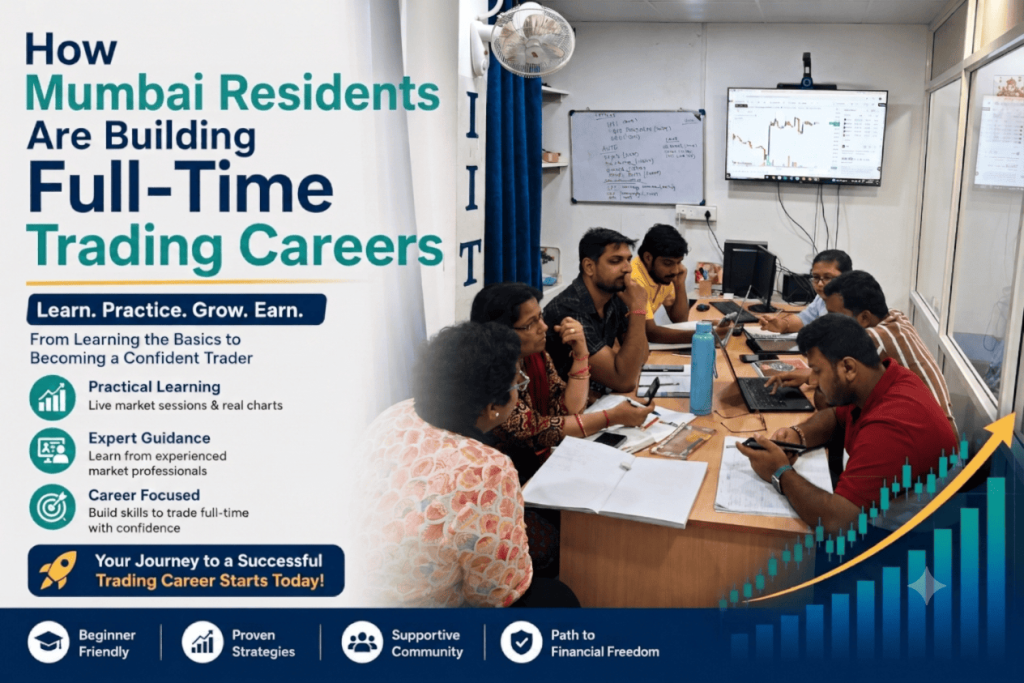
Explore how residents in Mumbai are transitioning into full-time trading careers — the mindset, preparation, and realistic path involved. Guide by IITA.
How Mumbai Residents Are Building Full-Time Trading Careers
Andheri West , one of Mumbai’s most established residential and commercial hubs, has seen a quiet but steady rise in residents pursuing trading as a serious, full-time profession. What used to be viewed as a risky gamble is now, for a growing number of disciplined individuals, a structured full-time trading career built on education, practice, and consistent risk management. This article explores how that transition is actually happening on the ground.
Redefining What “Full-Time Trading” Means
A full-time trading career isn’t about placing random trades and hoping for the best — for those who genuinely make it work, it functions like running a small business. It involves defined processes, careful capital management, continuous learning, and treating losses as an operational cost rather than a personal failure. Understanding this distinction is often the first step for anyone in Vashi considering this path seriously.
Why Mumbai Is Seeing This Shift
Mumbai’s growing infrastructure, connectivity, and increasing presence of co-working spaces have made it easier for people to work independently from home or shared offices. Combined with rising accessibility to trading platforms, real-time data, and structured market education, more residents now see a full-time trading career as a genuinely viable option rather than an unrealistic dream reserved for a select few.
The Realistic Path to a Full-Time Trading Career
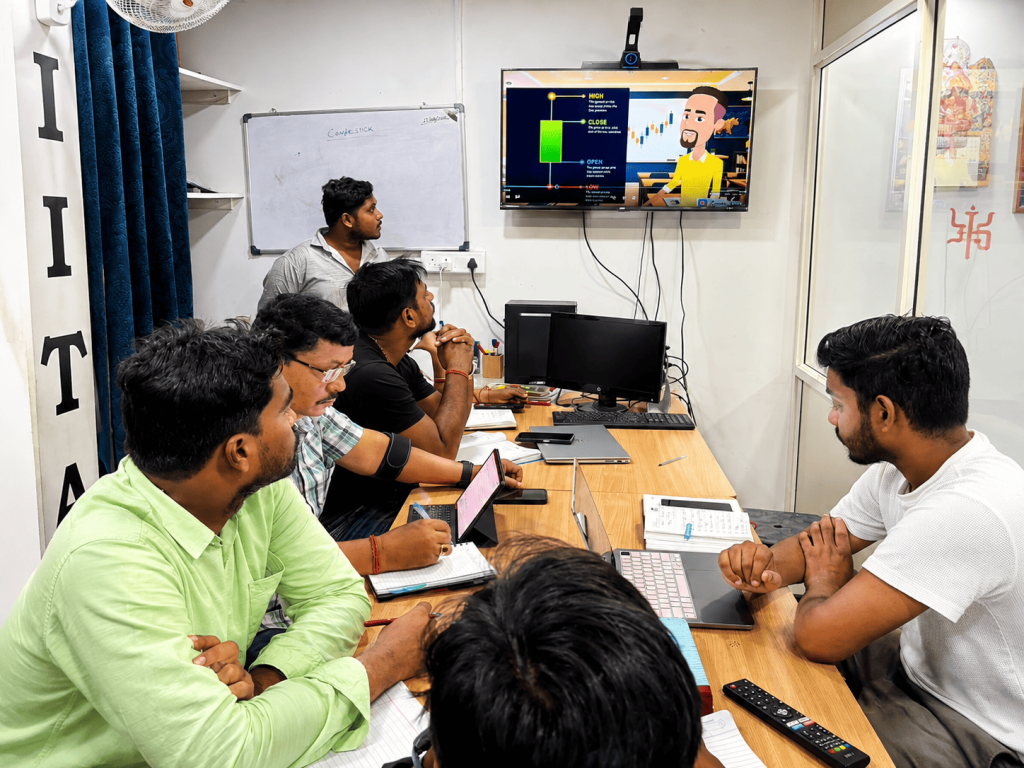
Stage 1: Building Foundational Knowledge
Nobody successfully builds a full-time trading career by skipping the fundamentals. This stage typically involves months of learning — understanding market mechanics, fundamental and technical analysis, and risk management principles — often through structured courses combined with independent study.
Stage 2: Practicing With Simulated or Small Capital
Before committing significant funds, most successful traders spend an extended period paper trading or trading with very small amounts, focused purely on testing and refining their strategy rather than generating meaningful income.
Stage 3: Testing Consistency Over Time
A full-time trading career requires demonstrated consistency — not just one good month, but performance validated across multiple market conditions (trending, range-bound, volatile) over an extended period, often six months to a year or more.
Stage 4: Building Sufficient Capital Reserves
Before leaving a stable income source, most successful transitions involve building both trading capital and a separate financial cushion — savings that can cover living expenses during inevitable drawdown periods without forcing panic-driven trading decisions.
Stage 5: Making the Transition Gradually
Rather than an abrupt jump, many Vashi residents who’ve built a full-time trading career describe a gradual transition — reducing other work commitments incrementally as trading income becomes more reliable and predictable.
What a Full-Time Trader’s Day Actually Looks Like
Contrary to the image of constant screen-watching, many full-time traders follow a structured, almost business-like routine:
- Morning preparation: Reviewing overnight global cues, economic calendars, and updating watchlists
- Active trading hours: Focused execution during the market’s higher-probability windows, rather than reacting to every price tick
- Midday review: Assessing open positions and adjusting risk as needed
- Post-market analysis: Journaling trades, reviewing what worked and what didn’t, and refining strategy
- Continuous education: Regularly studying new concepts, market developments, and reviewing past performance data
Skills Required Beyond Market Knowledge
A sustainable full-time trading career demands more than just knowing strategies:
- Financial discipline: Managing irregular income responsibly, unlike a fixed monthly salary
- Emotional resilience: Handling losing streaks without abandoning a tested strategy prematurely
- Record-keeping: Maintaining detailed trade logs for tax purposes and performance review
- Continuous adaptation: Adjusting strategies as market conditions and volatility patterns evolve over time
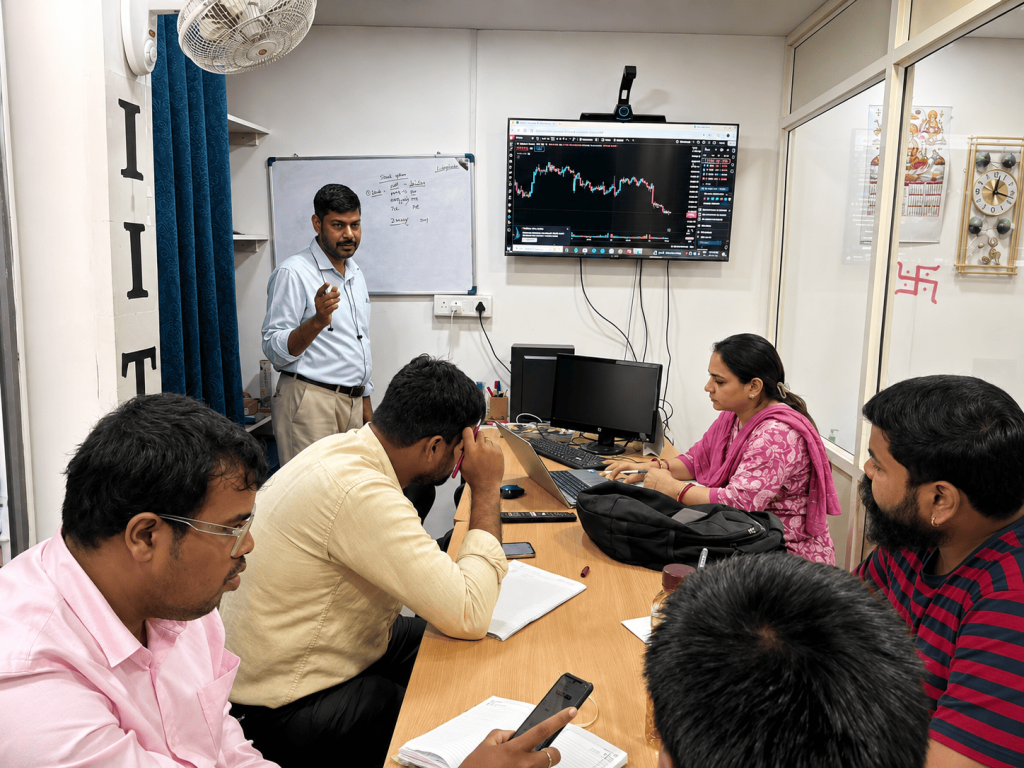
Common Challenges Vashi Traders Face
- Income unpredictability, especially in the early stages, requiring careful financial planning
- Social and family skepticism, since full-time trading remains a less conventional career choice compared to salaried employment
- Isolation, as trading is often a solitary pursuit compared to traditional office environments — some address this by joining trader communities or co-working spaces
- Overtrading during losing streaks, driven by pressure to “make up” for losses quickly
Why Structured Education Matters for This Transition
Attempting to build a full-time trading career purely through self-teaching and trial and error often takes significantly longer and comes with higher financial costs from avoidable mistakes. Structured courses covering technical and fundamental analysis, risk management, and trading psychology help compress this learning curve, giving aspiring full-time traders a much stronger foundation before committing serious capital.
Signs You Might Be Ready
- Consistent profitability across at least several months and different market conditions
- A clearly defined, tested trading strategy with documented rules
- Sufficient capital reserves covering both trading funds and living expenses
- Strong emotional discipline demonstrated through your trading journal, not just self-perception
Final Thoughts
Building a full-time trading career, as many residents in Andheri West are discovering, isn’t about chasing quick riches — it’s a gradual, disciplined process built on education, consistent practice, and realistic financial planning. Those who treat trading like a genuine profession, with the same seriousness and structured approach as any other career, are the ones most likely to sustain it long-term rather than burning out after a few volatile months.
Frequently Asked Questions
1. How long does it typically take to build a full-time trading career? Most successful transitions take at least one to two years of consistent learning, practice, and demonstrated profitability before someone can reliably depend on trading as their sole income source.
2. How much capital is needed to start a full-time trading career? There’s no fixed amount, but beyond trading capital, it’s important to have a separate financial cushion covering several months of living expenses to avoid panic-driven decisions during drawdowns.
3. Is a full-time trading career riskier than a regular job? It carries different risks — income variability and market-related losses — compared to the relative stability of salaried employment, which is why disciplined risk management is essential.
4. What trading style works best for a full-time trading career? This varies by individual, but many full-time traders combine intraday and swing trading strategies, adapting based on market conditions rather than relying on a single rigid approach.
5. Where can Vashi residents get structured training for a full-time trading career? Institutes offering comprehensive courses covering technical analysis, fundamental analysis, and risk management — such as IITA, with both offline and online options — provide a strong foundation for this transition.
📞 Book Your Free Career & Market Guidance Session Today!
Not sure where to begin? Speak with our academic counselors and discover the right learning path based on your goals.
📍 Office: Andheri West, Mumbai
💻 Training Mode: Both Offline & Online Classes available
📞 Call / WhatsApp: +91 84520 18280, +91 91870 98700
🌐 Website: https://iita.tech/stockmarket-course-in-mumbai/
📸 Follow us on Instagram: @stockmarketcourse_iita
Subscribe to Our YouTube Channels: 🔹 IITA Official: https://www.youtube.com/@iitab 🔹 Sudha Das (Market Learning): https://www.youtube.com/@sudhadas8420 🔹 Subrat Das: https://www.youtube.com/@subratdas2506
Disclaimer: Stock market trading involves financial risk. This article is for educational purposes only and is not investment advice.
IITA – https://iita.tech/stockmarket-course-in-mumbai/