
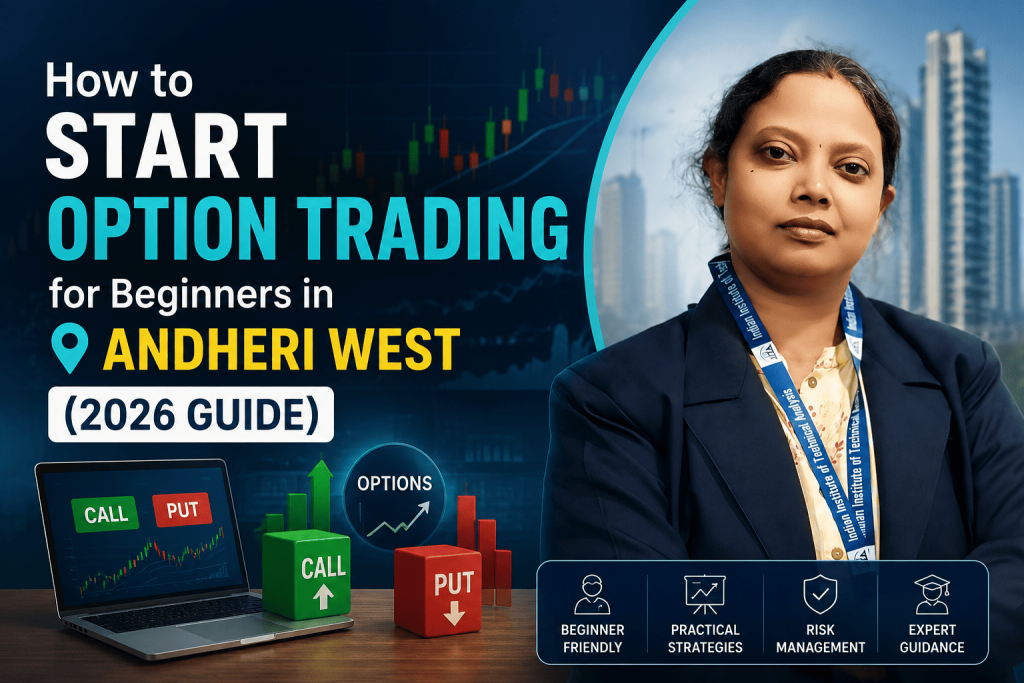
New to the markets? Learn how to start option trading for beginners in Andheri West with this 2026 step-by-step guide from IITA Mumbai.
How to Start Option Trading for Beginners in Andheri West (2026 Guide)
If you’ve spent any time on finance reels lately, you’ve probably seen people flaunting screenshots of Nifty or Bank Nifty trades — huge green numbers one day, painful red ones the next. It’s everywhere right now, especially among young professionals and college students across Mumbai’s western suburbs. This guide is for anyone genuinely trying to figure out option trading in Andheri West, without the hype and without the losses that usually come from jumping in too fast.
What Is Option Trading, Really?
Put simply, an option is a contract. It gives you the right — not the obligation — to buy or sell a stock or index at a fixed price before a certain date. That’s it. The appeal is leverage: you can control a fairly large position without putting up the full capital a stock purchase would require. Sounds great on paper, and that’s exactly the problem — too many beginners treat it like a shortcut instead of a skill that takes time to build.
There are only two building blocks to start with:
- Call Option — the right to buy at a fixed price
- Put Option — the right to sell at a fixed price
Get comfortable with these two before you even think about spreads, straddles, or iron condors. Everything else is built on top of this.
Why So Many People Are Learning Options in Andheri West
Andheri West has quietly become one of the busier pockets of Mumbai for finance education, and honestly, it makes sense. It’s got a mix of working professionals, small business owners, and students who commute along the western line every day, and it sits close enough to Bandra, Vile Parle, and Goregaon that people from those areas don’t mind the trip for a good classroom session. That convenience alone has pushed up demand for structured, in-person options courses in the area.
Getting Started: A Realistic Roadmap
1. Open a Demat and trading account. No way around this — it’s the first legal step. Pick a broker with a clean app, transparent charges, and support that actually responds. Most beginners here go with a discount broker while they’re still finding their feet, and that’s usually the smarter call.
2. Learn the vocabulary before anything else. Strike price, premium, expiry, lot size, ITM, OTM, open interest — these aren’t optional extras. Trading without knowing them is like getting behind the wheel without knowing what the pedals do.
3. Practice on paper first. Virtual or “paper” trading lets you test strategies with zero financial risk. Give it at least four to six weeks — watch how premiums shift with price movement, time decay, and volatility before a single real rupee goes in.
4. Start with index options, not individual stocks. Nifty and Bank Nifty tend to be more liquid and a bit steadier than stock options, with tighter bid-ask spreads. Most decent courses in the area push beginners here first for exactly that reason.
5. Keep your position sizes small. This is where a lot of beginners trip up — trading full lot sizes right out of the gate. Start tiny. Only scale up once you’ve got a track record across several months, not a couple of lucky trades.
6. Set a hard risk rule and stick to it. Decide your maximum loss per trade and per day before you enter anything. A common guideline: risk no more than 1–2% of your total capital on a single trade.
Mistakes That Trip Up Almost Every Beginner
- Buying deep out-of-the-money options just because the premium looks cheap
- Ignoring theta (time decay), which quietly eats into your position every day
- Overtrading on expiry days out of pure adrenaline
- Acting on random social media tips without checking anything yourself
- Skipping implied volatility entirely before entering a trade
Why a Structured Course Beats a Pile of YouTube Videos
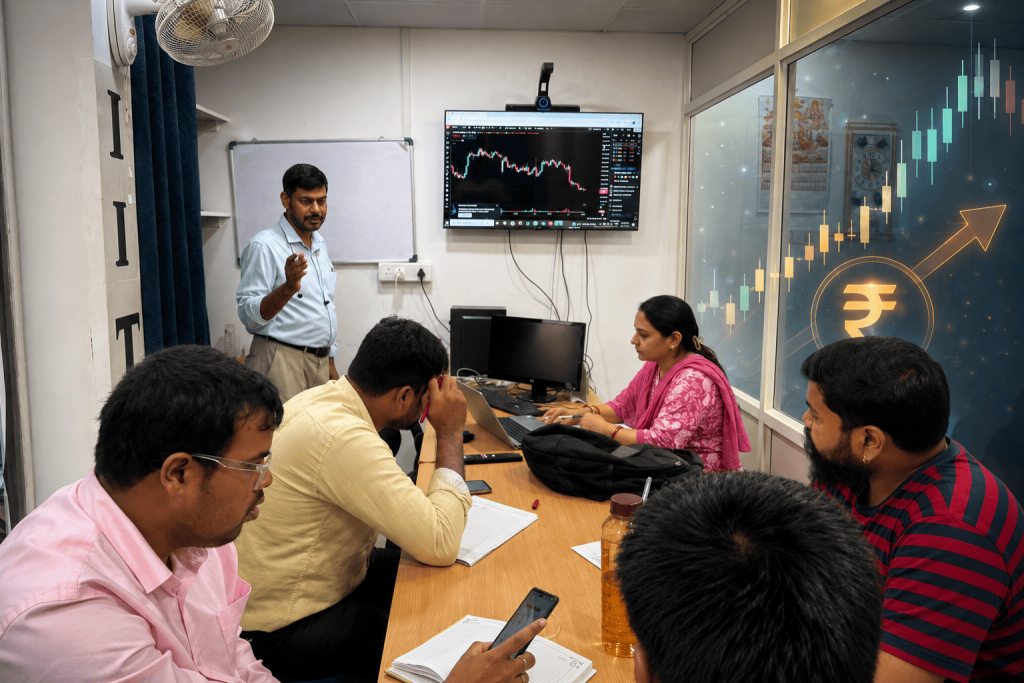
There’s no shortage of free content on this topic, but scattered videos rarely build a complete picture — you end up with gaps, and options are brutally unforgiving of gaps. Miss one concept, like how theta decay actually behaves, and it can quietly wreck an otherwise solid strategy. A proper course takes you from market basics, through technical analysis, and into strategy-building in a sequence that actually makes sense.
What a Good Options Course Should Actually Cover
Before signing up anywhere, check the curriculum includes:
- Stock market and derivatives basics
- The Options Greeks — Delta, Gamma, Theta, Vega
- Reading option chains and open interest
- Strategy building — covered calls, spreads, hedging
- Live market practice with a mentor watching over your shoulder
- Trading psychology and discipline
The Mindset Part Nobody Talks About Enough
Options aren’t a shortcut to quick money, no matter what the reels suggest. Even professional traders spend years sharpening their approach, and losses never fully go away — they’re part of the deal. The beginners who actually stick around long enough to get good are the ones who show up with patience, a written plan, and expectations grounded in reality rather than a highlight reel.
Choosing the Right Institute in Andheri West
If you’re serious about this, look for mentor-led, hands-on classes rather than a stack of pre-recorded lectures. Working with live option chains, building strategies in real time, and having someone to actually ask questions to — that’s what shortens the gap between “I understand the theory” and “I can trade this confidently.”
Frequently Asked Questions
Is option trading good for beginners in Andheri West? It can be, but “good” here really depends on how you approach it. Go in with paper trading first, learn the terminology properly, and keep your position sizes small — do those three things and you’re already ahead of most people who jump straight into live trades.
How much money do I actually need to start? Honestly, there’s no magic number. What matters more is that whatever amount you put in is money you can afford to lose while you’re still figuring things out — a lot of beginners start with just a few thousand rupees set aside purely for practice, and that’s plenty.
Okay, but how long until I’m actually ready to trade live? Give it two to three months of proper, consistent study and practice. That’s roughly the timeline most learners need before they can trade with any real confidence. Trying to skip ahead of that is probably the single most common reason new traders lose money early on.
Should I go with index options or individual stock options first? Index options — think Nifty, Bank Nifty — tend to be the friendlier starting point. They’re more liquid, the price action is a bit less wild, and the spreads are tighter, which makes them easier to work with while you’re still learning the ropes.
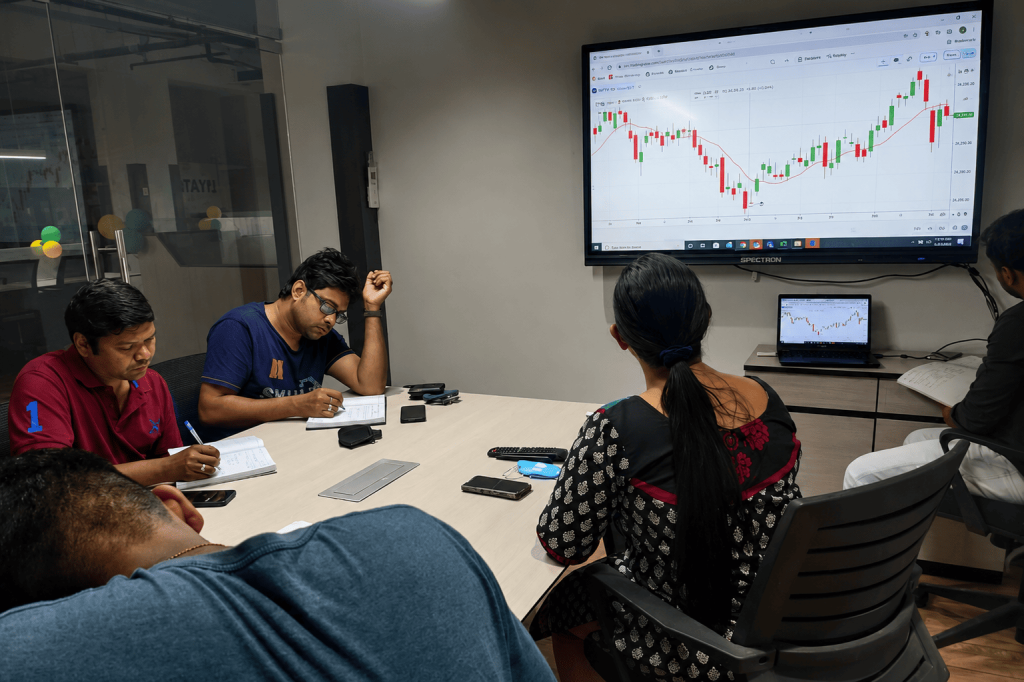
So where does someone in Andheri West actually go to learn this properly? Ideally somewhere with mentor-led sessions and live market practice, not just a library of pre-recorded videos. IITA runs both offline and online batches out of its Andheri West office, if that’s the kind of setup you’re after.
📞 Book Your Free Career & Market Guidance Session Today!
Not sure where to begin? Speak with our academic counselors and discover the right learning path based on your goals.
📍 Office: Andheri West, Mumbai
💻 Training Mode: Both Offline & Online Classes available
📞 Call / WhatsApp: +91 84520 18280, +91 91870 98700
🌐 Website: https://iita.tech/stockmarket-course-in-mumbai/
📸 Follow us on Instagram: @stockmarketcourse_iita
Subscribe to Our YouTube Channels: 🔹 IITA Official: www.youtube.com/@iitab 🔹 Sudha Das (Market Learning): www.youtube.com/@sudhadas8420 🔹 www.youtube.com/@subratdas2506
Disclaimer: Stock market trading involves financial risk. This article is for educational purposes only and is not investment advice.
IITA – https://iita.tech/stockmarket-course-in-mumbai/