
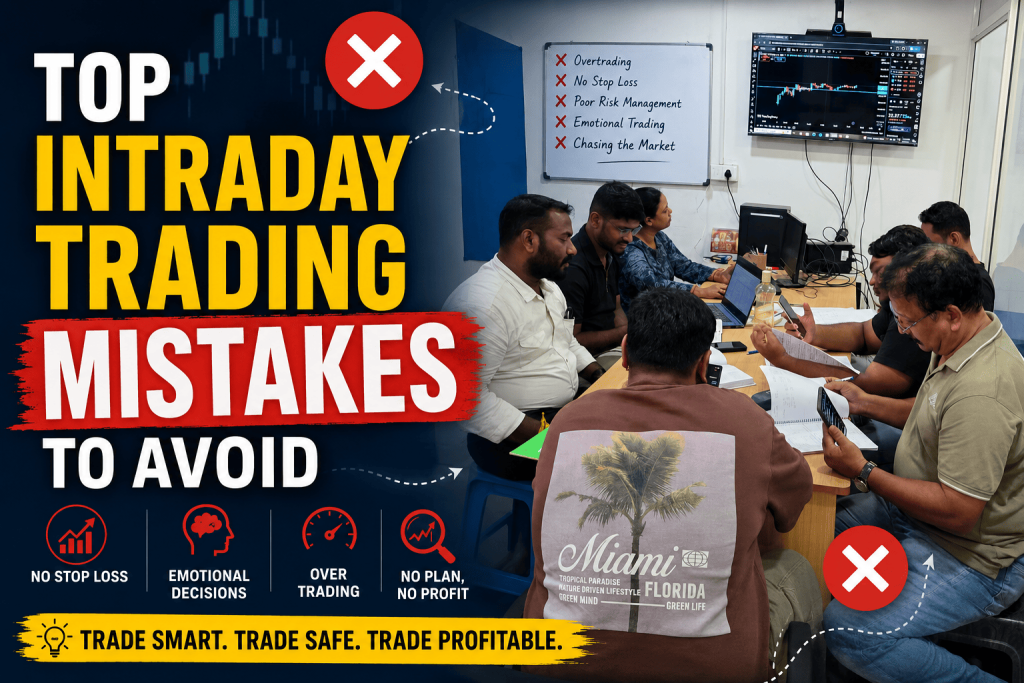
Discover the most common intraday trading mistakes Worli traders make and how to avoid them. Learn disciplined trading strategies with IITA Mumbai.
Top Intraday Trading Mistakes to Avoid: Lessons from Worli’s Trading Community
Worli, with its mix of corporate offices and financially active residents, produces a steady stream of new traders eager to try their hand at intraday trading. Unfortunately, many of them repeat the same avoidable mistakes that we have seen derail beginners for years. The good news is that these intraday trading mistakes are well documented and, once you are aware of them, surprisingly easy to correct.
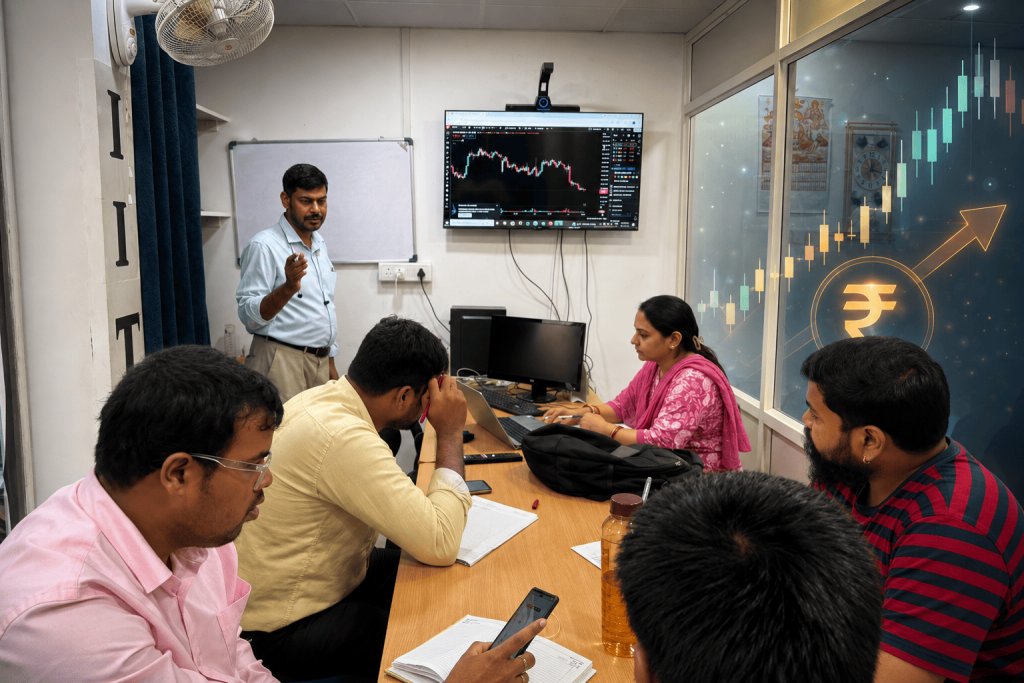
This guide covers the most common mistakes we see among new traders, including several straight from our own classroom discussions with students from Worli, so you can recognize and avoid them before they cost you real money.
Mistake 1: Trading Without a Stop-Loss
This remains the single most damaging habit among beginner traders. Without a stop-loss, a small, manageable loss can spiral into a account-threatening one, especially in volatile market conditions. Many traders convince themselves they will “manually exit” if things go wrong, but in the heat of a losing trade, emotions almost always override rational decision-making. A predetermined stop-loss, set the moment you enter a trade, removes this danger entirely.
Mistake 2: Overleveraging Positions
Brokers offer generous intraday leverage, sometimes allowing traders to control positions five to ten times larger than their actual capital. While this magnifies potential profits, it magnifies losses just as dramatically. We have seen Worli-based beginners take oversized positions using maximum available leverage, only to see a routine 1-2% market move wipe out a significant chunk of their capital. Understand your leverage and size your positions conservatively.
Mistake 3: Revenge Trading After a Loss
After taking a loss, many traders feel an urge to immediately jump back in and “win it back,” often taking a larger, riskier position than their original trade. This emotional reaction, known as revenge trading, is one of the fastest ways to turn a single bad trade into a genuinely damaging trading day. The disciplined response to a loss is to step back, review what happened, and only re-enter the market once you have a fresh, well-reasoned setup.
Mistake 4: Overtrading
Taking too many trades in a single session — sometimes ten or more — dramatically increases transaction costs, taxes, and the likelihood of impulsive, poorly-planned entries. Professional traders often take just a handful of high-conviction trades a day. Quality of setups matters far more than quantity of trades.
Mistake 5: Ignoring the Broader Market Trend
Many beginners analyze a stock in isolation without checking what Nifty or Bank Nifty is doing overall. Trading against the broader market trend significantly reduces your probability of success, since individual stocks are heavily influenced by index movement, especially during intraday sessions. Always check the index trend before committing to an individual stock trade.
Mistake 6: Chasing Stocks After a Big Move
Seeing a stock that has already rallied 5% and jumping in out of fear of missing out is a classic beginner mistake. By the time a big move is obvious to everyone, much of the easy profit potential has often already been captured by earlier participants, and the risk of a reversal or profit-booking pullback increases significantly.
Mistake 7: Trading Based on Tips and Rumors

WhatsApp groups, social media influencers, and casual “hot tips” from friends are unreliable sources for trading decisions. These tips rarely account for your personal risk tolerance, entry timing, or exit strategy, and by the time they reach you, the opportunity may already be gone or was never genuinely reliable in the first place.
Mistake 8: Not Having a Trading Plan
Entering the market without a clear plan for entry, target, and stop-loss is essentially gambling rather than trading. A trading plan, decided before the trade is placed, keeps your decisions objective and removes the temptation to make things up as the trade unfolds.
Mistake 9: Ignoring Risk Management Rules
Risking a large percentage of your capital on a single trade, not diversifying your setups, or failing to set a maximum daily loss limit are all forms of poor risk management. Even skilled traders with a high win rate can be wiped out by a few oversized losing trades if risk management is neglected.
Mistake 10: Skipping the Learning Process
Perhaps the most fundamental mistake is jumping into live intraday trading without proper education in technical analysis, risk management, and trading psychology. Many Worli beginners start trading with real capital based on fragmented knowledge picked up from scattered videos, without understanding the full picture. This almost always leads to expensive, avoidable losses in the early months.
How to Build Better Trading Habits
Correcting these mistakes takes conscious effort and structured practice:
- Always define your stop-loss and target before entering a trade.
- Use position sizing rules that limit risk to 1-2% of your capital per trade.
- Set a maximum daily loss limit and respect it without exception.
- Maintain a trading journal to track and learn from every trade.
- Avoid trading based on tips; build your own analysis skills instead.
- Take a step back after a loss rather than immediately re-entering the market.
Why Professional Training Helps Avoid These Pitfalls
Learning intraday trading through unstructured trial and error usually means learning through losses — an expensive way to gain experience. A properly structured course teaches not just chart patterns and indicators, but the discipline, risk management, and psychology needed to actually apply that knowledge under real market pressure.
At IITA, our trading courses are built around avoiding exactly these mistakes, with dedicated modules on risk management and trading psychology alongside technical analysis. Working professionals from Worli often join our online batches to build these skills around their work schedules, while others prefer our classroom sessions at Andheri West for a more immersive, hands-on learning experience.
Final Thoughts
Nearly every experienced trader has made most of these mistakes at some point in their journey — the difference is that successful traders learn from them quickly and build systems to prevent repeating them. By recognizing these common intraday trading mistakes early and building disciplined habits around risk management and planning, you can avoid the costly learning curve that derails so many beginners in their first year of trading.
Frequently Asked Questions
1. What is the biggest mistake intraday traders make?
Trading without a stop-loss is widely considered the most damaging intraday trading mistake. It turns small, manageable losses into large ones, since emotions often take over once a trade moves against you.
2. How many intraday trading mistakes should a beginner watch out for?
While there’s no fixed number, beginners typically fall into 8-10 recurring mistakes — including overleveraging, revenge trading, overtrading, ignoring market trends, and skipping proper education. Recognizing these early can save significant capital.
3. Why do most intraday traders lose money?
Most losses stem from a mix of poor risk management, lack of a trading plan, and emotional decision-making rather than a lack of market knowledge. Correcting these habits often matters more than learning new strategies.
4. Is overtrading really a mistake, or does it help build experience?
Overtrading increases transaction costs, taxes, and impulsive decisions without necessarily improving results. Professional traders usually take a limited number of high-conviction trades rather than trading frequently.
5. How can I avoid common intraday trading mistakes as a beginner?
Set a stop-loss before every trade, size positions conservatively, avoid tips and rumors, maintain a trading journal, and consider structured training that covers risk management and trading psychology, not just chart patterns.
6. Can proper training really help avoid these mistakes?
Yes. Most intraday trading mistakes come from gaps in discipline, risk management, and psychology, areas that structured courses specifically address, rather than gaps in technical knowledge alone. This is typically faster and less costly than learning purely through trial and error.
7. Where can I learn intraday trading professionally in Mumbai?
IITA offers both classroom sessions at Andheri West and online batches, with dedicated modules on risk management and trading psychology alongside technical analysis.
📞 Book Your Free Career & Market Guidance Session Today!
Not sure where to begin? Speak with our academic counselors and discover the right learning path based on your goals.
📍 Office: Andheri West, Mumbai
💻 Training Mode: Both Offline & Online Classes available
📞 Call / WhatsApp: +91 84520 18280, +91 91870 98700
🌐 Website: https://iita.tech/stockmarket-course-in-mumbai/
📸 Follow us on Instagram: @stockmarketcourse_iita
Subscribe to Our YouTube Channels: 🔹 IITA Official: https://www.youtube.com/@iitab 🔹 Sudha Das (Market Learning): https://www.youtube.com/@sudhadas8420 🔹 Subrat Das: https://www.youtube.com/@subratdas2506
Disclaimer: Stock market trading involves financial risk. This article is for educational purposes only and is not investment advice.
IITA – https://iita.tech/stockmarket-course-in-mumbai/