

Learn how to identify the best stocks for intraday trading using liquidity, volatility, and volume criteria. A practical guide from IITA Mumbai, Veera Desai Rd.
Best Stocks for Intraday Trading: How to Choose the Right Ones
One of the most common questions we hear from students near Veera Desai Road and across Mumbai is deceptively simple: “Which stocks should I trade intraday?” Beginners often assume there is a secret list of guaranteed winning stocks, but the truth is that choosing the best stocks for intraday trading is a skill built on understanding a handful of specific criteria, not chasing tips or hot stock names.
In this guide, we will break down exactly what makes a stock suitable for intraday trading and how you can build your own reliable watchlist rather than relying on random recommendations.
Why Stock Selection Matters More Than Strategy
Many beginner traders spend all their energy perfecting an entry strategy while ignoring the fact that they are applying it to the wrong stocks. Even the best technical setup will fail repeatedly if the underlying stock lacks the liquidity and volatility needed for intraday trading. Getting stock selection right is often 50% of the battle before you even look at a chart pattern or indicator.
Key Criteria for Selecting Intraday Stocks
1. High Liquidity Liquidity refers to how easily a stock can be bought or sold without significantly affecting its price. Look for stocks with consistently high daily trading volumes — typically several lakh to crore shares traded per day. High liquidity ensures narrow bid-ask spreads, meaning you will not lose money simply due to the gap between buying and selling prices. Nifty 50 and Nifty Bank constituents are generally excellent choices for beginners because of their deep liquidity.
2. Sufficient Volatility Volatility is what creates trading opportunity — without meaningful price movement during the day, there is little profit potential for intraday traders. However, volatility must be balanced; extremely volatile penny stocks can move erratically and against you just as fast as they move in your favor. Look for stocks with a healthy average daily range, typically 1.5% to 3% for large-cap names, giving you enough room to capture a profitable move while managing risk sensibly.
3. Correlation with the Broader Market Stocks that move in sync with Nifty or Bank Nifty are generally easier to analyze because you can use index movement as a directional cue. Stocks that behave erratically, disconnected from broader market trends, are harder to predict and less suitable for beginners.
4. Avoid Stocks in the News for the Wrong Reasons Stocks caught up in regulatory investigations, promoter pledge issues, or sudden negative news tend to behave unpredictably and are best avoided for intraday trading, especially by beginners still building their skills.
5. Sector Leaders Over Laggards Within any sector — banking, IT, auto, pharma — the leading, most liquid stocks tend to offer cleaner price action and more reliable technical patterns compared to smaller, less-followed names in the same sector.
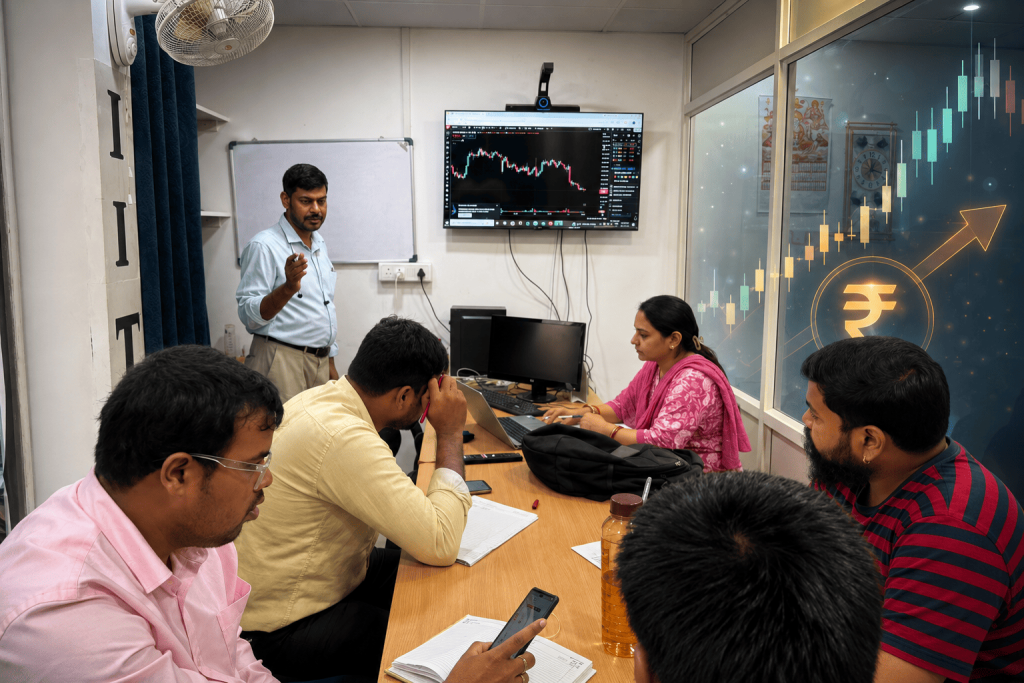
Building Your Daily Watchlist
Rather than randomly scrolling through the market each morning, professional traders prepare a shortlist the evening before or early in the morning using these steps:
Step 1: Check the Pre-Market and Global Cues Look at how US markets closed overnight, how SGX Nifty or GIFT Nifty is trading, and any major global or domestic news that could set the tone for the day.
Step 2: Screen for Stocks with Unusual Volume or News Use a stock screener to identify names showing pre-market volume spikes, earnings announcements, or significant news — these often become the most active, tradable stocks of the session.
Step 3: Mark Key Levels the Night Before For your shortlisted stocks, mark previous day’s high, low, and close, along with any significant support and resistance zones. This preparation lets you react quickly and confidently once the market opens rather than scrambling to analyze in real time.
Step 4: Limit Your Watchlist to 5-10 Stocks Trying to track the entire market simultaneously is overwhelming and leads to poor decision-making. A focused watchlist of a handful of liquid, familiar stocks allows you to understand their typical behavior and react to opportunities more effectively.
Sectors That Are Popular Among Intraday Traders
Banking and Financial Stocks: Bank Nifty constituents like leading private and PSU banks are extremely popular for intraday trading due to their high liquidity and sensitivity to interest rate and economic news.
IT Stocks: Large IT companies often show clean technical patterns and react predictably to currency movements and global tech sector cues.
Auto Stocks: Sensitive to monthly sales data, festive season demand, and input cost news, auto stocks often provide clear intraday trends around such announcements.
It’s worth noting that “best” is relative to the day’s market conditions — a stock that is excellent to trade during a results season may be too unpredictable to trade on an ordinary trading day.

Mistakes Beginners Make While Selecting Stocks
- Chasing tips from social media or WhatsApp groups: These recommendations rarely account for your personal risk tolerance or trading style and are often outdated by the time you receive them.
- Trading too many stocks at once: Spreading attention across too many names dilutes focus and increases the chance of missing important price action.
- Ignoring liquidity in favor of “cheap” stocks: Low-priced stocks can seem attractive for buying more shares, but many are illiquid and unsuitable for intraday trading.
- Not adapting the watchlist to changing market conditions: A stock that was ideal for intraday trading last month may not behave the same way today due to changing volatility or news flow.
Learning to Build This Skill Systematically
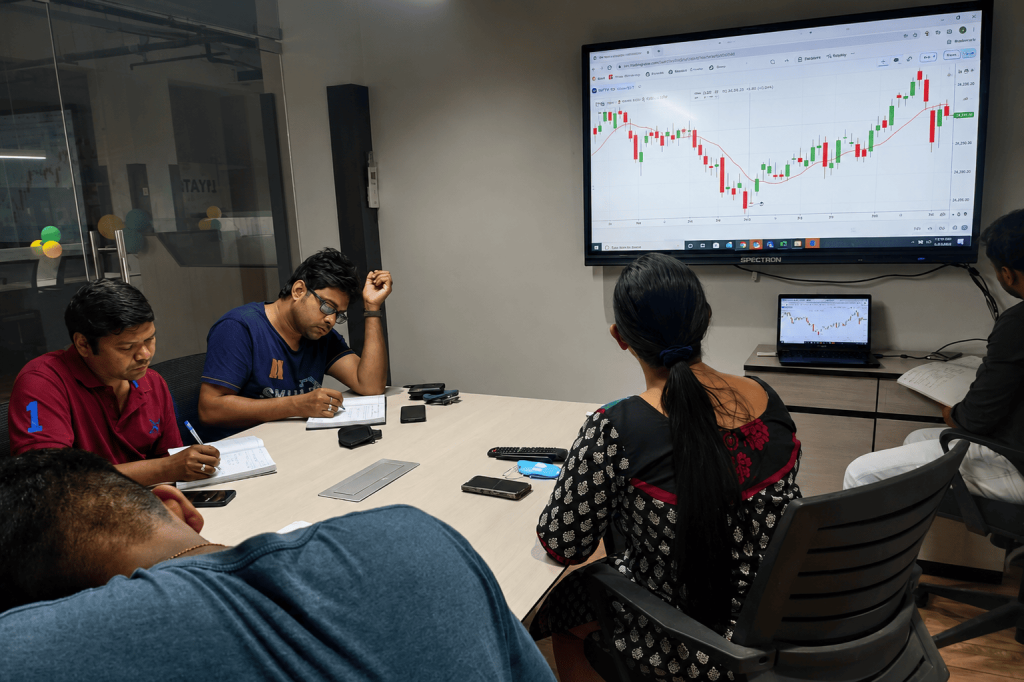
Selecting the right stocks consistently is a skill that develops through practice, screening discipline, and understanding market structure — not through random guessing. At IITA, our intraday trading modules include dedicated sessions on stock screening, sector analysis, and building a repeatable pre-market routine, so students near Veera Desai Road and across Mumbai learn to build their own reliable watchlists rather than depending on tips.
Whether you prefer classroom learning at our Andheri West center or the flexibility of our online batches, our courses are structured to take you from stock selection basics to complete, confident intraday trading strategies.
Final Thoughts
There is no single “best stock” that works for every trader on every day. The best stocks for intraday trading are the ones that match your strategy, offer sufficient liquidity and volatility, and fit within a disciplined pre-market routine. Focus on building a systematic screening process rather than chasing tips, and you will find that stock selection becomes one of the strongest pillars of your intraday trading success.
Frequently Asked Questions
1. What are the best stocks for intraday trading?
The best stocks for intraday trading are typically high-liquidity, high-volume names like Nifty 50 or Nifty Bank constituents that offer sufficient daily volatility (usually 1.5% to 3% average range for large caps) and move in sync with the broader market, making them easier to analyze and trade predictably.
2. Is there a fixed list of stocks that are always good for intraday trading?
No. “Best” is relative to daily market conditions — a stock that trades well during results season may become too unpredictable on an ordinary day. Instead of relying on a fixed list, traders should build a screening process to identify suitable stocks each day.
3. Why is liquidity important when choosing intraday stocks?
High liquidity means a stock can be bought or sold without significantly affecting its price, resulting in narrow bid-ask spreads. This ensures you don’t lose money simply due to the gap between buying and selling prices, and that your orders execute close to your intended price.
4. Should beginners trade low-priced or penny stocks for intraday?
Generally no. Low-priced stocks may seem attractive since you can buy more shares, but many are illiquid and prone to erratic price movement, making them unsuitable and riskier for intraday trading, especially for beginners.
5. How many stocks should be on an intraday trading watchlist?
A focused watchlist of around 5-10 liquid, familiar stocks is recommended. Trying to track the entire market at once is overwhelming and often leads to poor decision-making and missed opportunities.
6. Which sectors are popular for intraday trading?
Banking and financial stocks (especially Bank Nifty constituents), large IT companies, and auto stocks are commonly favored due to their liquidity, sensitivity to news events, and tendency to show cleaner technical patterns.
7. Should I trade stocks based on tips from social media or WhatsApp groups?
It’s best avoided. Such tips rarely account for your personal risk tolerance or trading style, and are often outdated by the time they reach you. A systematic, criteria-based screening approach is far more reliable.
8. How do I prepare a watchlist before the market opens?
Check overnight global cues and pre-market indicators like SGX/GIFT Nifty, screen for stocks showing unusual volume or news, mark key support and resistance levels from the previous day, and shortlist a focused set of stocks the night before or early morning.
9. Where can I learn how to select the right intraday stocks?
Stock selection is a skill built through practice, screening discipline, and market structure knowledge. At IITA Mumbai, our intraday trading modules include dedicated sessions on stock screening and sector analysis, with both offline classes near Veera Desai Road/Andheri West and flexible online batches available.
📞 Book Your Free Career & Market Guidance Session Today!
Not sure where to begin? Speak with our academic counselors and discover the right learning path based on your goals.
📍 Office: Andheri West, Mumbai
💻 Training Mode: Both Offline & Online Classes available
📞 Call / WhatsApp: +91 84520 18280, +91 91870 98700
🌐 Website: https://iita.tech/stockmarket-course-in-mumbai/
📸 Follow us on Instagram: @stockmarketcourse_iita
Subscribe to Our YouTube Channels: 🔹 IITA Official: https://www.youtube.com/@iitab 🔹 Sudha Das (Market Learning): https://www.youtube.com/@sudhadas8420 🔹 Subrat Das: https://www.youtube.com/@subratdas2506
Disclaimer: Stock market trading involves financial risk. This article is for educational purposes only and is not investment advice.
IITA – https://iita.tech/stockmarket-course-in-mumbai/