
Trading Psychology: How to Control Your Emotions While Trading
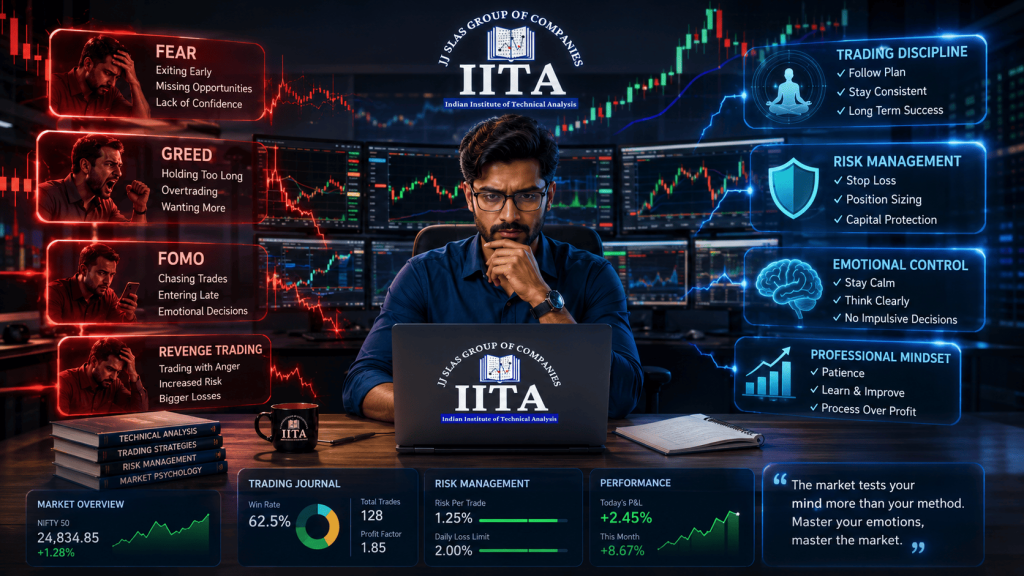
Trading psychology is the emotional and mental side of trading that influences every decision you make in the market. You can have the best strategy, the best indicators, and the best chart patterns, but if you cannot control your emotions, you will still lose money. Studies consistently show that the majority of trading losses are caused not by bad analysis but by bad psychology: fear, greed, impatience, and the inability to follow a plan.
This guide covers the key psychological challenges every trader faces and gives you practical, actionable ways to manage them.
Why Trading Psychology Matters
Trading is one of the very few activities where you can be analytically correct and still lose money because your emotions made you act incorrectly. For example:
- You identify a perfect setup, but fear prevents you from entering, and you watch the trade work perfectly without you
- You are in a winning trade, but greed makes you hold too long, and the market reverses, turning your profit into a loss
- You miss a big move, so FOMO makes you chase the next trade at a terrible price
- You take a loss and anger drives you to take a reckless revenge trade, doubling your loss
Every experienced trader will tell you: the market does not care about your feelings. The traders who succeed are those who learn to manage their emotions, not eliminate them (that is impossible), but prevent them from driving trading decisions.

The Four Emotional Enemies of Every Trader
1. Fear
Fear in trading shows up in several ways: fear of losing money (causing you to exit trades too early), fear of being wrong (causing you to avoid taking valid trades), and fear of missing out (causing you to enter too late). Fear is the most common emotion and affects both new and experienced traders.
How to manage it: Use pre-defined stop losses so you know your maximum loss before entering. When the worst-case scenario is known and acceptable, fear loses its grip. Position sizing (risking only 1–2% per trade) also reduces fear because no single trade can significantly hurt you.
2. Greed
Greed makes traders hold winning positions too long, hoping for more profit, until the market reverses and the profit disappears. It also makes traders increase their position size after a few wins, thinking they are invincible, only to give back all their gains on the next loss.
How to manage it: Set a profit target before entering every trade and stick to it. When your target is hit, take the money. You can always re-enter if the move continues. Trailing stop losses (moving your stop loss up as price moves in your favour) are another tool to lock in profits without the emotional decision of “when to sell.”
3. FOMO (Fear of Missing Out)
FOMO hits when you see a stock or index making a big move and feel the urge to jump in immediately, even though you missed the original entry. FOMO trades are almost always bad trades because you are entering late, at a worse price, without a proper plan.
How to manage it: Accept that you will miss trades. The market gives new opportunities every single day. A missed trade costs you nothing. A FOMO trade can cost you real money. Write this down and read it every morning before the market opens: “Missing a trade is free. A bad trade costs money.”
4. Revenge Trading
Revenge trading happens after a loss when you immediately take another trade (usually bigger and riskier) to try to win the money back quickly. This almost always leads to a second loss, creating a downward spiral. It is driven by ego and anger, not analysis.
How to manage it: Implement a strict rule: after two consecutive losing trades, walk away from the screen for at least 30 minutes (or the rest of the day if the losses are significant). Have a daily loss limit, and once it is hit, stop trading. No exceptions.
Practical Habits for Better Trading Psychology
- Write a trading plan before the market opens and follow it strictly during the day
- Keep a trading journal – record every trade, the reason for entry, and your emotional state. Review weekly. Patterns in your emotional mistakes become visible.
- Set daily loss limits – stop trading when you hit your limit. The market will be there tomorrow.
- Trade smaller when uncertain – reducing position size during uncertain periods reduces emotional pressure
- Accept losses as part of the business – every business has costs. Losing trades are your cost of doing business in the market. They are not failures; they are expenses.
- Avoid trading when emotionally compromised – after a fight, during illness, when sleep-deprived, or when distracted. Bad emotional states produce bad trades.
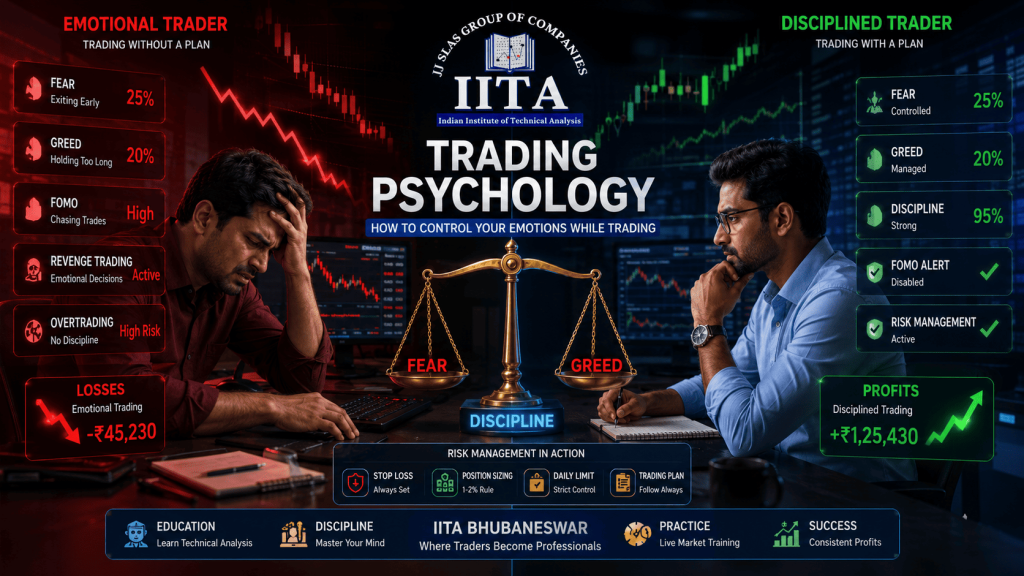
The Trading Journal: Your Most Underrated Tool
A trading journal is a written record of every trade you take, including the setup, entry, exit, result, and your emotional state. It sounds tedious, but it is the single best tool for improving your psychology. After a few weeks, you will start seeing patterns: maybe you always revenge trade after losses, or you always exit too early out of fear, or your FOMO trades are always losers.
Once you see the pattern, you can fix it. Without a journal, you keep making the same mistakes without realising it.
Common Mistakes Related to Trading Psychology
- Blaming the market, the broker, or the indicator instead of your own emotional decisions
- Not having a plan and making impulsive decisions based on how you feel
- Overtrading – taking too many trades because of boredom or excitement
- Holding losing trades hoping they will recover, while cutting winners short
- Changing strategies after every loss instead of sticking to one plan and improving it

Frequently Asked Questions About Trading Psychology
What is trading psychology in simple words?
Trading psychology is the emotional and mental side of trading. It includes how you handle fear, greed, losses, and the pressure of making decisions with real money at stake. Managing your psychology is essential because emotional decisions in trading almost always lead to losses.
How do I stop emotional trading?
Have a written trading plan with clear rules for entry, exit, and stop loss. Use position sizing to keep each trade small enough that a loss does not trigger emotional reactions. Keep a trading journal to identify your emotional patterns. Set daily loss limits and respect them.
Why do most traders lose money?
Most traders lose money because of poor psychology, not poor analysis. They overtrade, revenge trade, ignore stop losses, chase FOMO trades, and let greed turn winners into losers. Proper education and disciplined risk management address all of these.
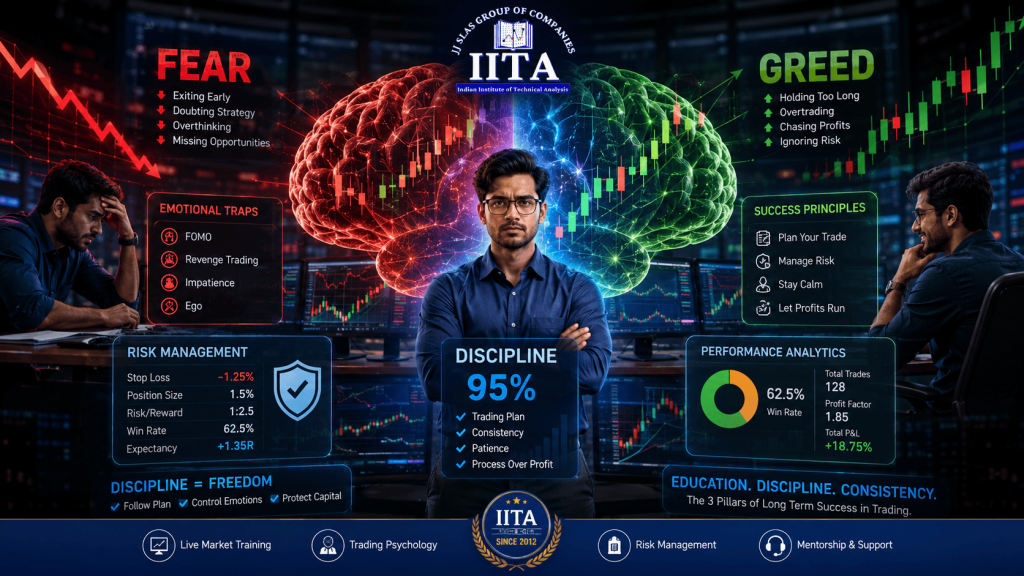
Build the Mindset of a Disciplined Trader at IITA Bhubaneswar
At IITA, we do not just teach you patterns and indicators. We teach you how to trade them with discipline under real market pressure. Our live trading sessions deliberately expose you to the emotions of winning and losing in real time, so you learn to manage them with a mentor by your side, not when you are alone with your own money.
How IITA Trains Your Trading Mindset
- Live trading with real emotional pressure – not just theoretical knowledge
- Trading journal practice built into the curriculum
- Post-trade review sessions where emotional mistakes are identified and corrected
- Risk management and discipline emphasised equally with strategy
- Ongoing mentorship for emotional support during the early trading months
The market tests your mind more than your method. Visit iita.tech or call us to book a free workshop.
Disclaimer: Stock market trading involves financial risk. This article is for educational purposes only and is not investment advice.
IITA – iita.tech